

The tools you need to balance workload
Mosaic gives firms live capacity visibility across teams, faster workload balancing, and earlier hiring signals—with heatmaps, automation, and AI.
Most firms don’t have a utilization problem. They have a capacity planning problem.
When workload is planned in silos, leaders never get a clear view of what the firm can and cannot get done. That’s when overbooking, bench time, late staffing changes, and late projects start to pile up.
Capacity planning is not static. Your tools shouldn’t be either.
ERPs Record the Past
Schedules shift, roles change, scope creeps. ERPs are good at recording what happened, but they can’t keep up with real-time capacity management.
Spreadsheets Can’t Keep Up
The spreadsheet you reviewed Monday is already wrong by Tuesday. Planning data needs to stay connected to your systems—not scattered across exports and side files.
Mosaic Is the Live Planning Layer
Your ERP remains the financial backbone. Mosaic integrates with it to become the live planning layer that keeps capacity current.
See what’s really happening across the firm
The Mosaic capacity planning heatmap gives leaders a fast, visual answer to the most important planning questions: where do we have room to take on more work, where are we overloaded, and what can we actually deliver?
One glance. The whole picture.
.png)
Overload & Bench Visibility
Most managers can’t see overall capacity—so overbooking and bench time stay hidden. Mosaic shares capacity views across departments, teams, and roles so the whole firm can act on the same picture.

As projects shift and people move, Mosaic keeps capacity current
People coming and going. Projects starting and stopping. Priorities changing and scope creeping. You need a platform built to adjust capacity as quickly as work changes.

Live Capacity Updates
See where teams are overloaded, where capacity is available, and work should be rebalanced before deadlines slip or time is lost.

Shortcuts & Automation
Drag & drop, shortcuts, and bulk actions remove friction that makes capacity planning feel like extra homework.

Real-Time Plan Sync
Edit once, and related workload views stay aligned so the plan stays usable across the firm. No manual reconciliation.
.png)
Plan capacity and share staff across the whole firm
Shared capacity views show where capacity is available, where workload is building, and who can help. Teams can share people resources across offices and departments, making better, more efficient use of the talent they already have.
When capacity is visible across the organization, work can be distributed more intelligently and teams spend more time on the highest priority work.
Maintaining balance across teams is the key to efficiency
Balance maximizes utilization. Monitor backlog in real time so you know whether you have enough work to keep everyone busy, can take on more work and how much, or need to hire and for which role.
The data to answer those questions is always live—never a week-old export.
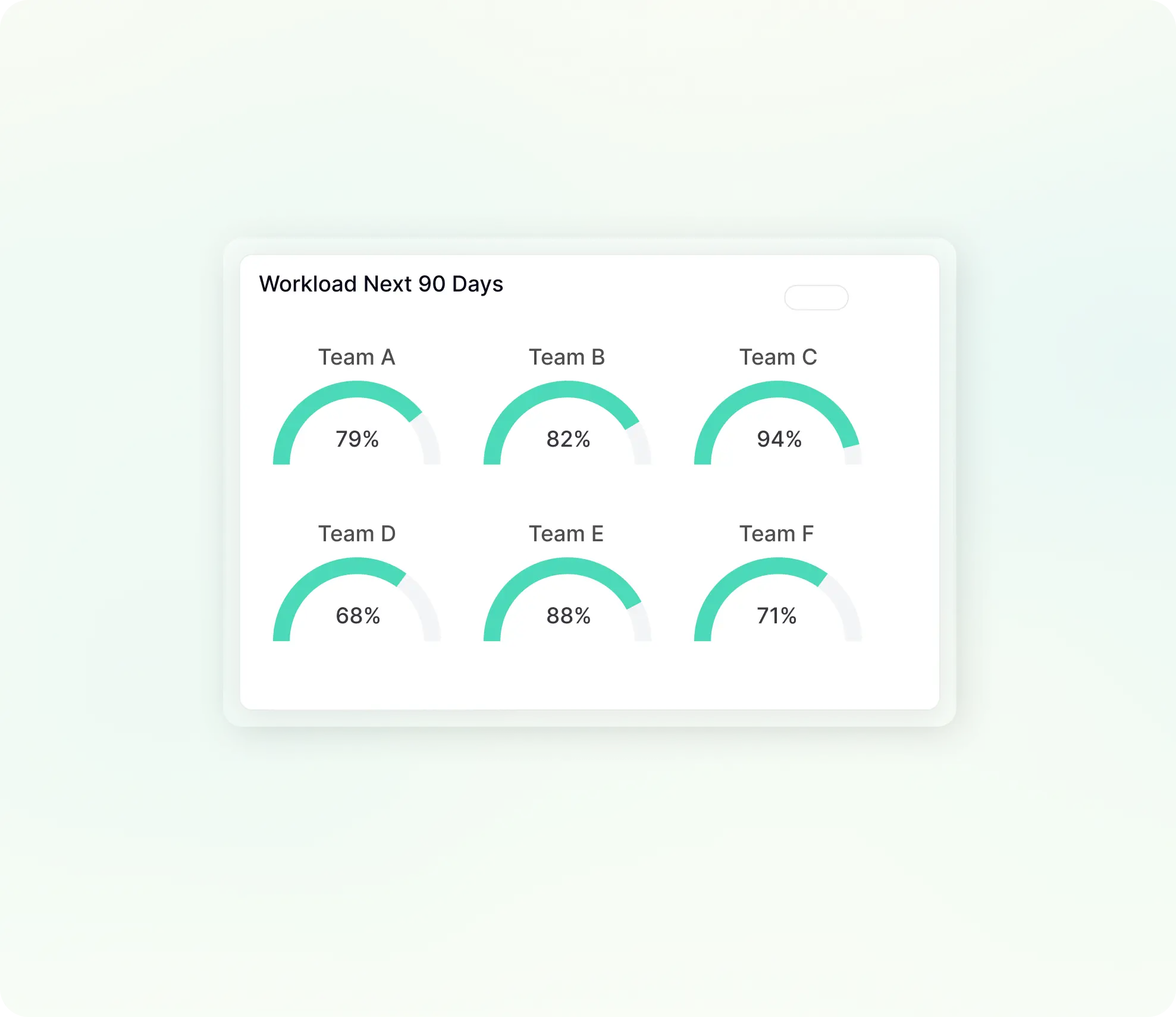
Workload Report
See the team, department, or office at a glance to spot imbalance fast.
Bench Report
See who is available and put open capacity to work before billable time is lost.

See hiring pressure before teams get stretched thin. Know which role, when, and for which projects.
Let AI optimize capacity decisions
Capacity data changes too quickly for managers to piece together by hand. Overscheduling, underscheduling, and bottlenecks go unnoticed until deadlines slip or teams burn out.
Mosaic AI monitors capacity risk across the firm, surfaces where work should move, suggests reassignments, and delivers automated briefs—so leaders act on insight instead of instinct.
- Automated weekly briefs & monthly reporting on capacity issues
- Surfaces which teams have capacity to rebalance work
- Suggests reassignment for workload optimization
- Finds the right project work for people on the bench
- Automated Briefs
- Capacity Monitoring
- Hiring Signals
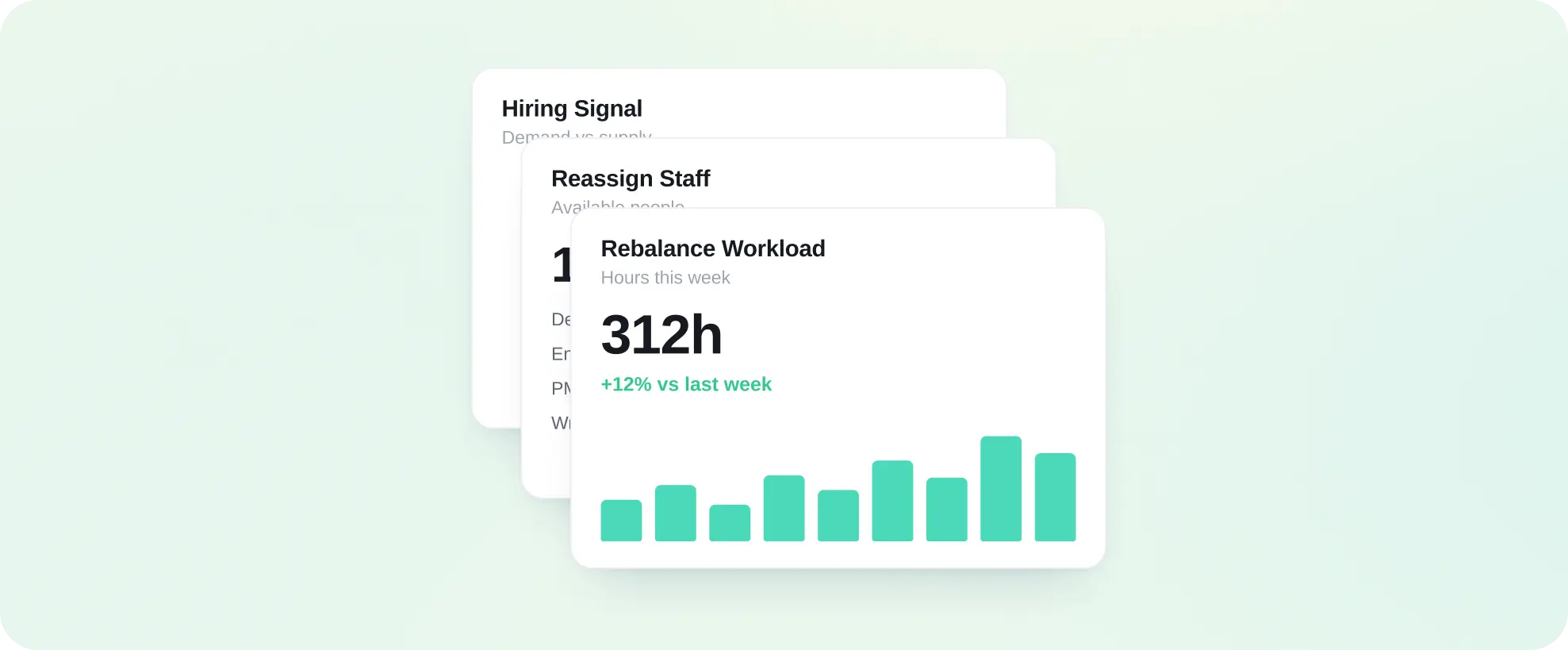
Plan together, not in silos
Work rarely stays inside one team or office. Mosaic gives firms shared planning views across the organization, making it easier to coordinate work, shift assignments, share staff, and keep everyone working from the same current plan.
When planning is shared, managers can work together instead of planning in isolation. That creates better accountability, fewer blind spots, and a plan the firm can actually act on.
- Multi-Office
- Department Views
- Shared Plans
- Firm-Wide Visibility
.png)
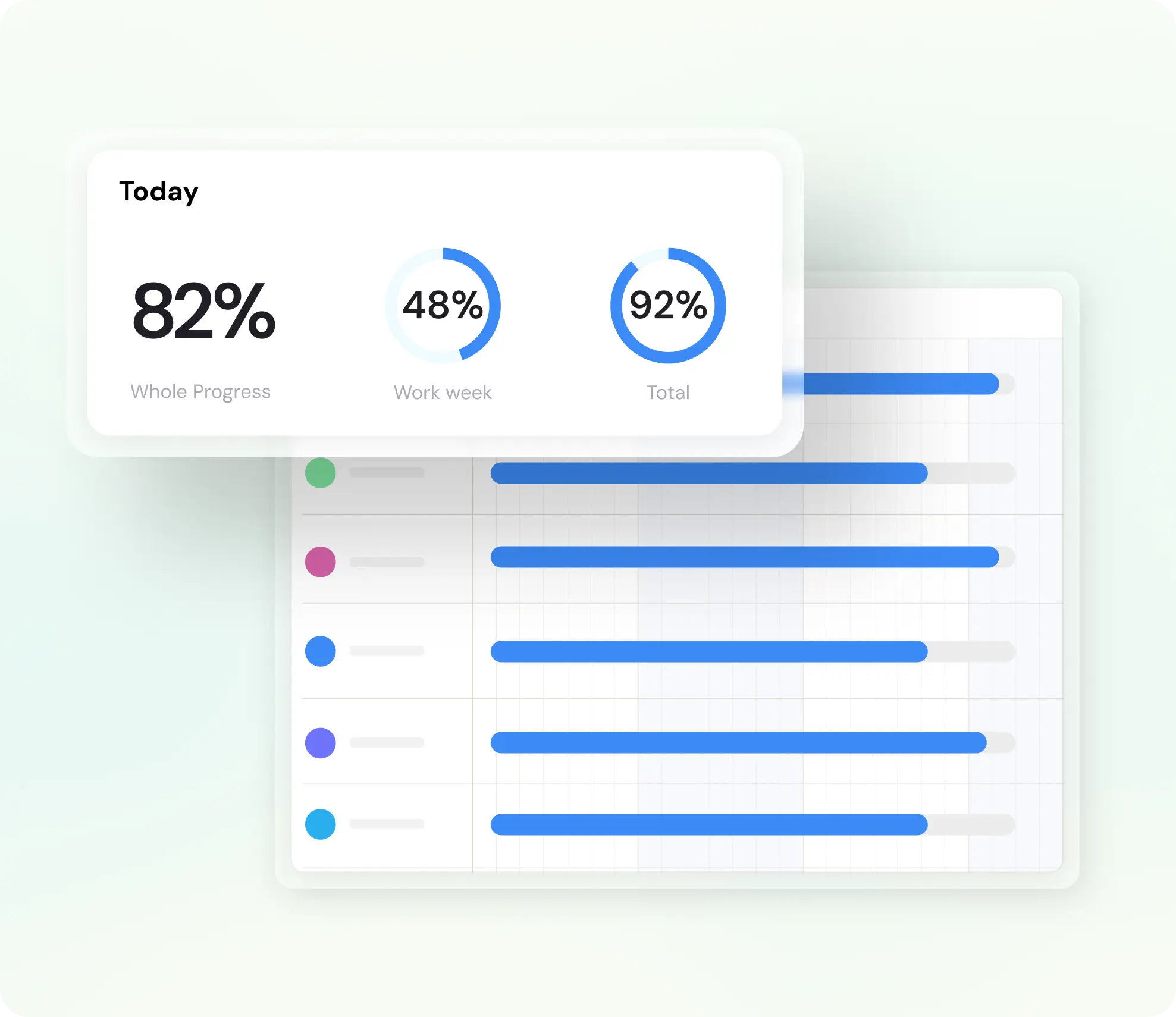
Data the firm can confidently plan around
Mosaic connects with your existing software—pulling in staff, clients, projects, fees, and more—to deliver planning visibility.
When project and people plans stay current, the firm gets accurate data it can confidently use to plan workload, revenue, and headcount. That is how better planning turns into better downstream decisions.
- ERP Integrations
- Financial Sync
- Connected Data
A live capacity planning system built for the people doing the planning
Mosaic is not a static spreadsheet cobbling together information, and it’s not a finance-first work estimation buried inside a broader ERP. It’s a live capacity planning system built to show what teams can and cannot get done, keep workload balanced as work changes, and surface risk early enough to act.

Live, Not Static
Capacity data updates as work changes. No exports, no side files, no waiting for someone to update the spreadsheet.

People-First
Built around how teams actually work— not bolted onto a financial planning module designed for a different purpose.

AI-Augmented
AI monitors capacity risk, suggests optimizations, and delivers briefs so managers act on insight instead of instinct.

Firm-Wide Visibility
Shared capacity views across offices and departments so work gets distributed intelligently and talent doesn’t sit idle.

Fast Enough for Meetings
Drag-and-drop, shortcuts, and real-time sync mean capacity planning happens in the conversation—not after it.

Earlier Hiring Signals
Role demand reports and AI monitoring surface hiring pressure before teams are stretched thin and deadlines start slipping
Planning, allocation, and capacity are a three-legged stool
Capacity planning doesn’t work in isolation. If your resource plans aren’t connected, gaps stay hidden until it’s too late. If your staffing isn’t connected to capacity, your capacity numbers don’t mean anything. Weaken one, and the others can’t hold.


Capacity planning is how firms turn backlog into delivery without chaos
Mosaic helps firms understand what work they have, what their people can actually take on, and how to keep workload balanced before deadlines slip, teams burn out, or billable time is lost.
One platform.
Every planning dimension.
Resource Planning
Plan better
Capacity Planning
Manage Workload
Resource Allocation
Build Teams
Resource Analytics
Understand Your Talent
Headcount Planning
Revenue & Headcount Planning