

Is your ERP’s resource planning module enough?
Most ERPs come with a resource planning module, so it looks free. But a module few people plan in leaves gaps in the data, and a partial picture can’t forecast workload, revenue or headcount. Mosaic, an AI project and resource planning tool, gets everyone planning, and plugs into the ERP you already run.
Are you really saving on a free tool if no one uses it? This page sets out what the module costs a firm in time, utilization and forecasts, and when it’s enough. We make Mosaic.
What’s the difference between an ERP’s planning module and Mosaic?
An ERP’s planning module is one small part of a system built for finance, so the working plan usually ends up in side spreadsheets. Mosaic is built for planning alone, so everyone who plans or delivers the work keeps one live plan.
Some say an ERP’s resource module is much the same as Mosaic. That’s like saying an iPhone is just a phone. ERP tools might get a firm to level 3 of 5 in resource management maturity. Mosaic and its consulting take it to 5.
| The question | Your ERP’s planning module | Mosaic |
|---|---|---|
| The plan | A planning module, with the working plan in side spreadsheets | One live plan: move a person or a date, and capacity and forecasts update with it |
| What it answers | What was spent, billed and earned, and a forecast if the plan is kept current | What’s ahead: projected utilization, role demand, hiring needs and what-if scenarios |
| After the plan is entered | It waits for someone to update it | Chello, Mosaic’s AI planning assistant, chases updates and flags what’s slipping. It changes nothing without approval |
What does a free planning module cost a firm?
Every extra hour your project leaders put into the ERP’s planning module, and the spreadsheets around it, returns less, and those are hours they could have billed.
Mosaic’s ease of use and automation give that time back: a significant increase in billable time from the time savings alone.
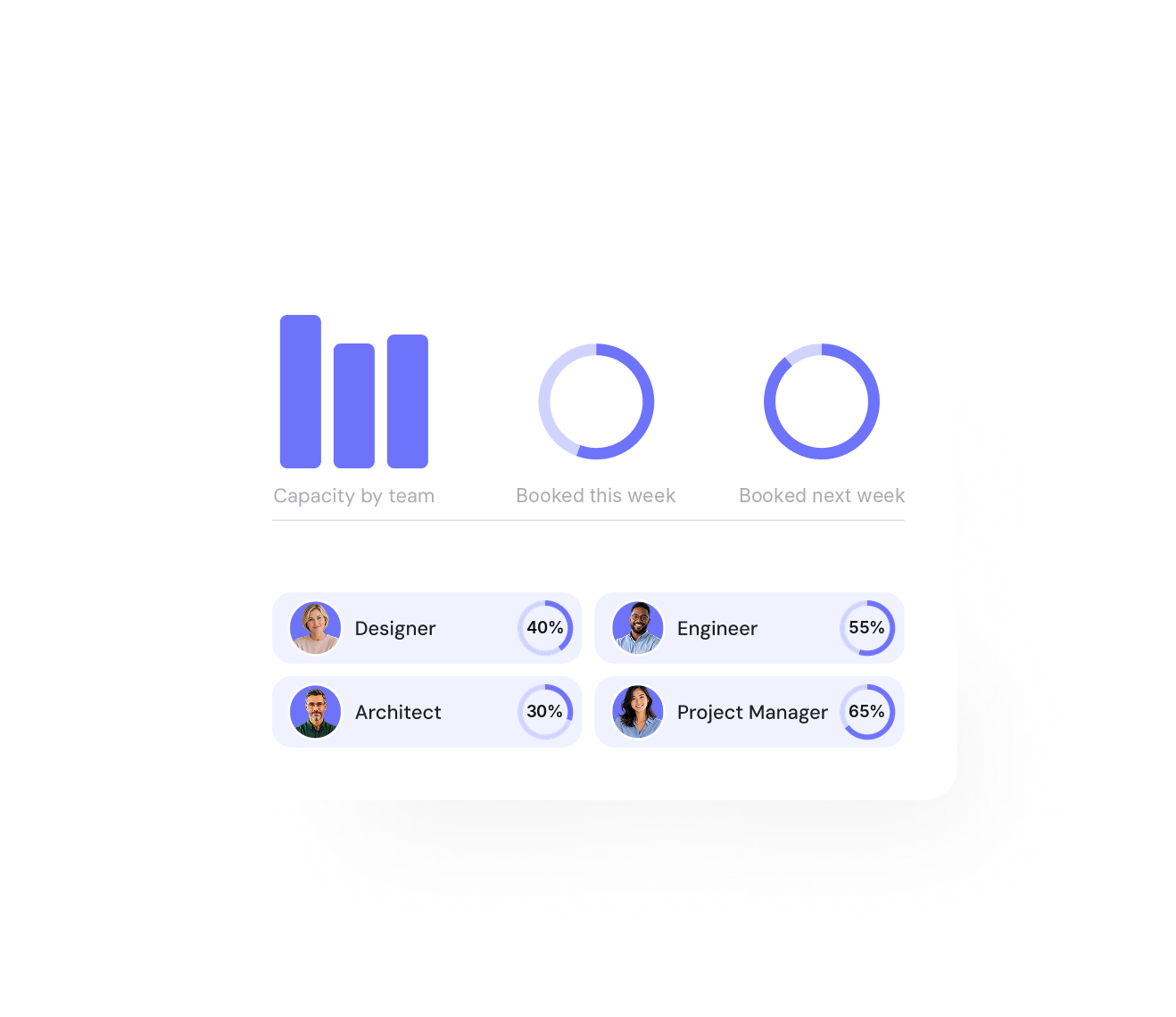
Gaps in the planning data, so the firm can’t forecast workload, revenue or headcount.
The full picture, so the firm can forecast workload, revenue and headcount.
What the full picture gives a firm:
- More billable time and higher utilization, without burnout
- Earlier warning on budget, workload and backlog risk
- Better staffing decisions
- Stronger margins and more predictable results
- Deliverables on time
Why don’t project managers plan in the ERP?
Because most planning modules are built for the people who run the books, not the people who run the work. They usually take training and permissions, so managers keep their own spreadsheets, and the ERP’s plan goes stale.
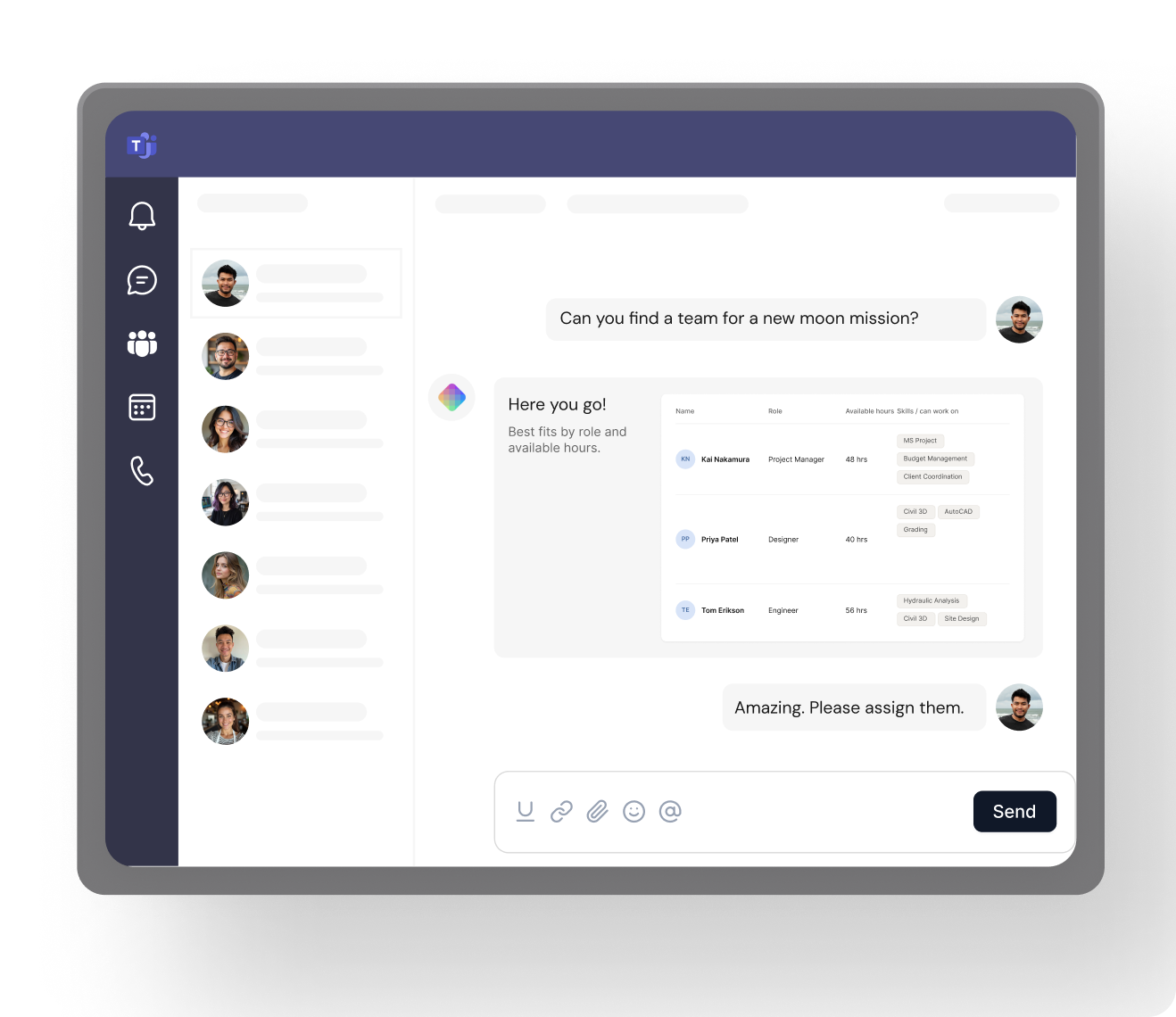
Mosaic is designed to be easy from day one: a visual plan built for busy managers rather than system administrators, and Chello asks each manager for updates in Microsoft Teams.
How much is a few points of utilization worth?
Five more points of utilization is worth $1m to $2m a year in profit per 100 people, or $10k to $20k per person, according to the Resource Management Institute. CetraRuddy went from 77% to 90% utilization on Mosaic and had its best year in 38 years.
Sources: Resource Management Institute · Mosaic 2026 Resource Management Report · Mosaic customer data · CetraRuddy, a Mosaic customer
$1m to $2m
profit a year per 100 people from 5 more points of utilization
80%+
of billable capacity planned at firms on Mosaic
84%
of ops and delivery leaders report stronger profit or delivery predictability with dedicated planning software
How do firms get everyone planning?
The software is half of it. The other half is consulting: a Mosaic team sets the rollout plan, trains your people and guides the change management, drawing on hundreds of firms, until 80% of your team’s billable capacity is planned.
Firms are integrated in days, trained and live in 30 to 60 days.
Mosaic vs. ERPs · Resource planning that works with your ERP · The resource management maturity model
- Connect Mosaic to the ERP, which brings in projects, people, roles, rates, budgets and actual hours.
- Each manager plans the next few weeks, with Mosaic’s team guiding the rollout.
- Chello asks managers for updates in Microsoft Teams, so the plan stays current.
- Cross 80% of billable capacity planned, then forecast workload, revenue and headcount from the plan.

“You’re not just selling us gym equipment. You’re giving us a gym membership and personal training: the equipment, the training and the knowledge to use it, and a strategy to get to success.”
For firms that live and die by planning
Mosaic is for project-driven firms that value project and resource planning, management and forecasting. When people are your most valuable resource, and they determine what you can get done and when, you want the best tool for the job: one that gives you control over delivery when deadlines matter. Without one, firms leave $10k to $20k per employee on the table every year: the profit in five more points of utilization, according to the Resource Management Institute. And there’s much more to lose.
How is Mosaic priced?
Mosaic is priced in annual parts: a per-seat subscription, a platform fee and an optional ERP integration, which Mosaic owns and maintains. Onboarding and implementation is a one-time cost, scoped to the firm’s rollout, and the team sets out all of it in one quote. Firms who plan on Mosaic typically see 10 to 20x ROI in a full year, and full-priced plans are backed by a 5x money-back guarantee. The return comes from staffing projects before the work starts rather than after.
The per-seat rate steps down as headcount increases, and the platform fee funds onboarding, training, a Customer Success Manager, support and hosting.
Speak to the team to learn more.
What else do firms ask about ERP planning modules?
When is the ERP’s planning module enough?
When a few administrators plan for a small team and the firm doesn’t need forecasts from the plan. Once project managers across the firm need to plan, and leaders need workload, revenue and headcount forecasts, the gaps in the data cost more than the module saves.
Do we have to stop using the ERP?
No. The ERP keeps the books. Mosaic reads it, and nothing goes back unless your firm sets it up with Mosaic’s API.
What does Mosaic read from the ERP?
Projects, people, roles, rates, budgets and actual hours, kept in sync with your ERP, so teams plan in their first week, not their first quarter.
How long does it take to go live?
Firms are integrated in days, trained and live in 30 to 60 days. Mosaic’s team stays on the rollout until 80% of billable capacity is planned.
Who keeps the plan current?
Every manager, for their own projects and people. Chello asks each of them for updates in Microsoft Teams, so nobody has to chase.
Book a 20-minute demo
If time is all you sell, planning is how you protect it, and that’s worth a lot more than a free module saves.