

The resource management maturity model
Firms with mature resource planning outperform their peers on profitability, efficiency and client satisfaction, according to research by the Project Management Institute and the Center for Business Practices. This model sets out five levels, from staffing by memory to a fully planned firm, and where ERP planning tools and Mosaic, an AI project and resource planning tool, each take a firm.
Most firms can place themselves in a minute. The useful question is what it takes to move up a level. We make Mosaic, so the last two levels describe how firms reach them on it.
What are the five levels of resource management maturity?
Each level is defined by how the firm decides who works on what: by memory, by team, by one standard process, from live data across the firm, or from a full plan that forecasts what comes next. ERP planning tools might get a firm to level 3. Mosaic and its consulting take it to 5.
| Level | What it looks like | Where the plan lives |
|---|---|---|
| 1. Ad hoc | Staffing by memory and hallway talk | In people’s heads |
| 2. Siloed | Every team keeps its own process | A spreadsheet per team or office |
| 3. Standardized | One process, but the data goes stale | An ERP planning tool, with side spreadsheets |
| 4. Connected | Live data across the whole firm | A planning tool connected to the ERP |
| 5. Predictive | Fully planned, with forecasts and AI keeping the plan current | A dedicated planning tool most of the firm keeps current, with an AI assistant |
Why do ERP planning tools tend to stop at level 3?
An ERP standardizes the process: one module, one set of fields. But the plan depends on managers updating it, few of them work in the ERP, and the data goes stale while the working plan drifts back into spreadsheets.
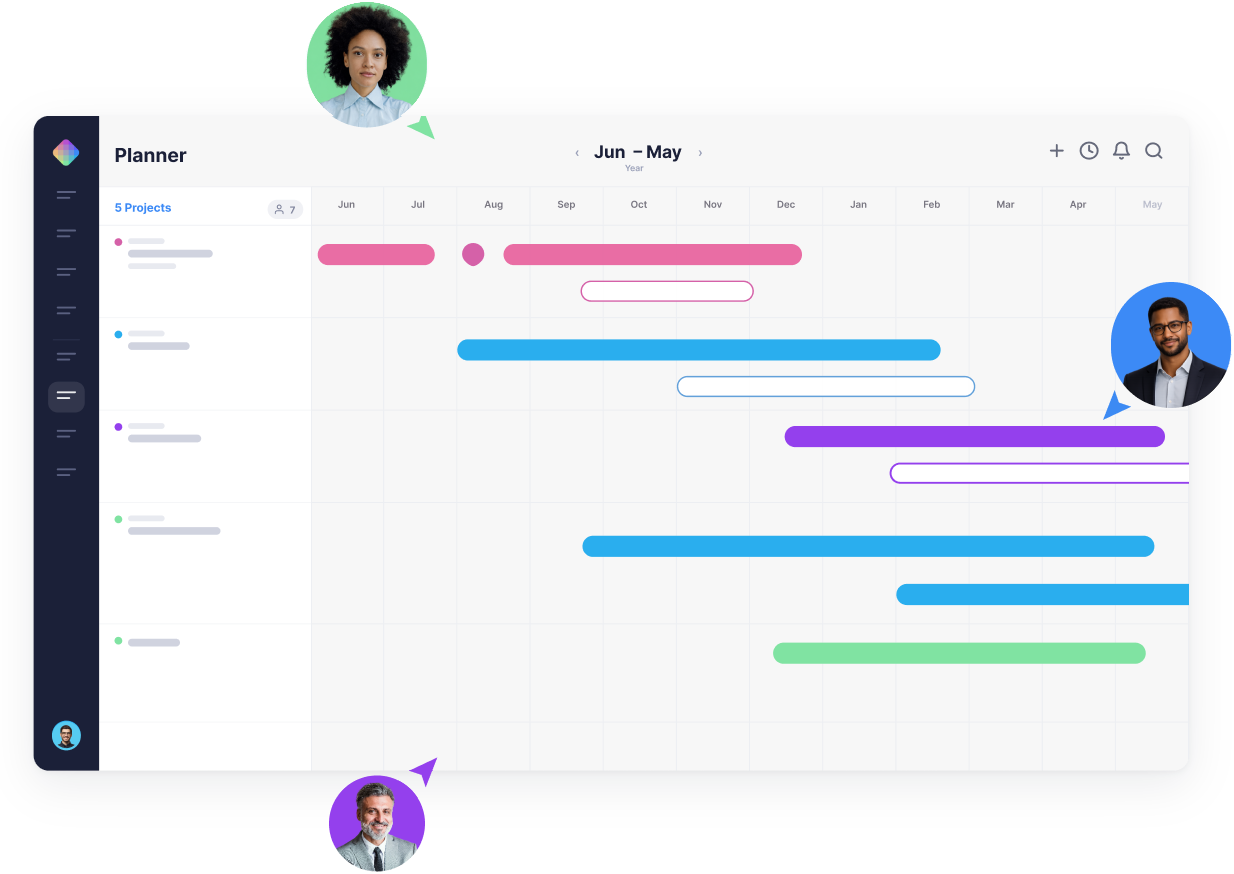
Mosaic gets past level 3 by getting everyone planning: a plan managers use, built from the data in the ERP, and consulting until 80% of the firm’s billable capacity is planned.
One process, but the data goes stale between updates.
Fully planned, with forecasting and AI that keep the plan current.
What level 5 looks like:
- 80% or more of billable capacity planned
- Projected utilization by person and role
- Demand by role, and when to hire
- Scenarios side by side before decisions
- Chello asking managers for updates in Microsoft Teams
How does a firm move up a level?
Each step changes how people plan, not only the software they plan in.

From 1 to 2
Give each team one place to see who’s working on what, and when.

From 2 to 3
Agree on one process, one set of roles and one way to plan across teams.

From 3 to 4
Put the plan where managers will keep it current, starting from the data in the ERP: projects, people and hours.

From 4 to 5
Plan most of the work, then forecast revenue, utilization and hiring from the plan.
The threshold
Past 80% of billable capacity planned, the plan holds enough of the work to forecast from.

Staying there
Chello asks managers for updates in Microsoft Teams, and planned hours are compared with actual.
How much of a firm’s billable capacity is typically planned?
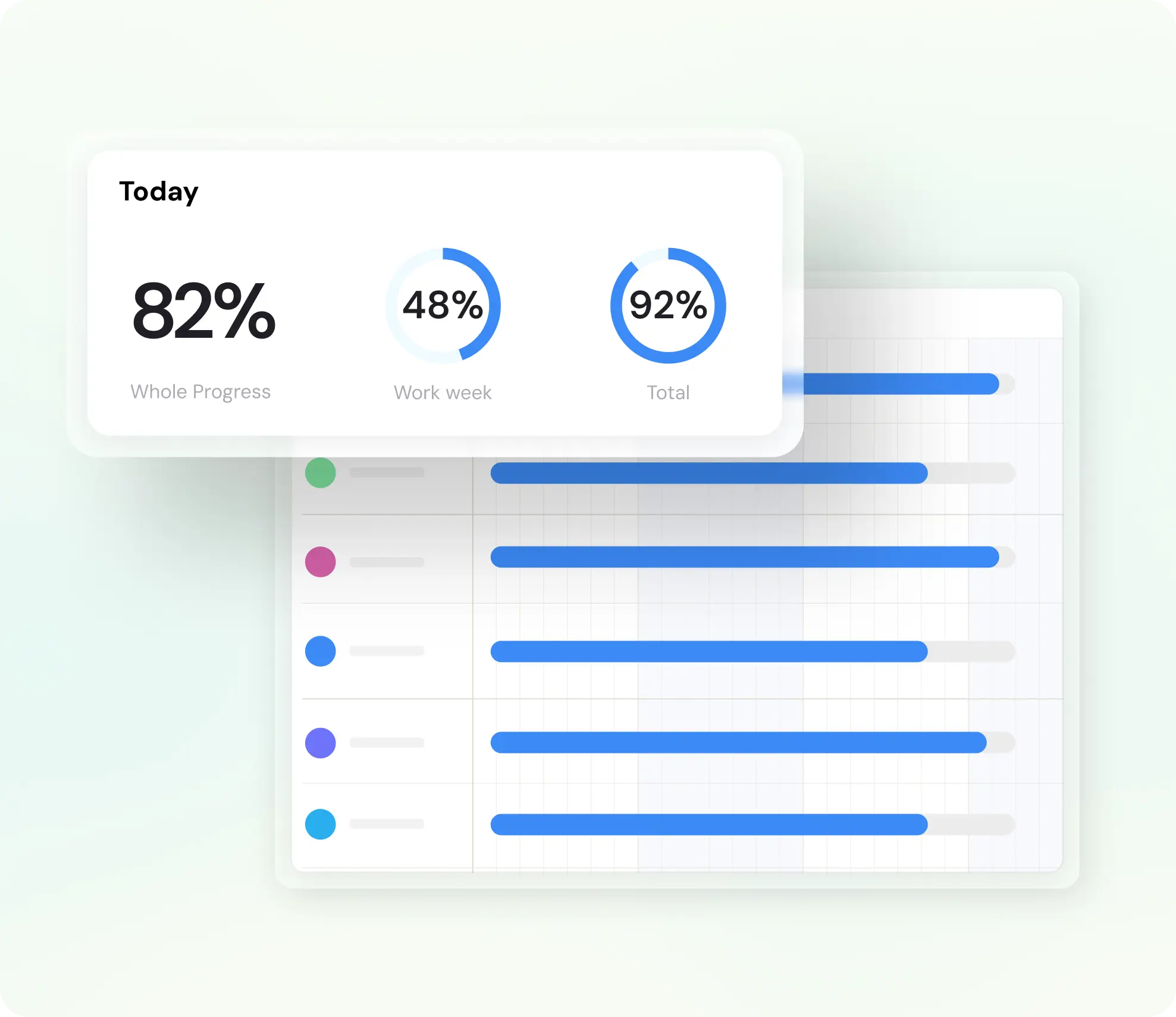
At the firms we see running on ERPs and spreadsheets, under 50% of billable capacity is planned. Firms on Mosaic plan 80% or more, and over 90% with Chello in Microsoft Teams. CetraRuddy went from 77% to 90% utilization and had its best year in 38 years.
Source: Mosaic customer data · CetraRuddy, a Mosaic customer
Under 50%
of billable capacity planned at firms on ERPs and spreadsheets
80%+
planned at firms on Mosaic
Over 90%
planned with Chello in Microsoft Teams
What does reaching level 5 mean for profit?
Five more points of utilization is worth $1m to $2m a year in profit per 100 people, or $10k to $20k per person, according to the Resource Management Institute.
And 84% of operations and delivery leaders report stronger profit or delivery predictability with dedicated planning software, according to Mosaic’s 2026 Resource Management Report.

“Here we are at the end of July. And I’m trying to know what our staff is doing in October. Are we running off a cliff and nobody’s doing anything, or are we going to have so much work that we need to hire new people? Mosaic answers those questions.”
What else do firms ask about resource management maturity?
What is a resource management maturity model?
A scale for how a firm plans its people, from staffing by memory to a fully planned firm that forecasts what comes next, so the firm can see what its next step takes.
Where do most firms sit?
At the firms we see running on ERPs and spreadsheets, under half of billable capacity is planned, which is level 3 at best.
Can an ERP get a firm to level 5?
Rarely on its own. ERP planning tools standardize the process, but the plan goes stale without managers keeping it current. Mosaic and its consulting take firms to level 5, alongside the ERP.
How long does it take to move up?
Firms on Mosaic are integrated in days, trained and live in 30 to 60 days, and the rollout continues until 80% of the team’s billable capacity is planned.
Book a 20-minute demo
See where your firm sits, and what level 5 looks like on your own projects and people.