

Work management tools vs. Mosaic for consulting firms
Asana, monday.com, ClickUp and Wrike organize tasks for teams in any industry. Consulting firms sell their people’s time, so what matters is every consultant’s week across engagements, against billable targets. Mosaic is planning first, for project-driven firms like these. It plans the people across every engagement and forecasts revenue and hiring from that plan, and Chello, its AI planning assistant, asks managers for updates in Microsoft Teams.
Many consulting firms already run a work management tool for tasks, and many keep it. The question is where the firm plans its consultants and its forecasts. We make Mosaic, so this page says which firms each one fits.
Can Asana, monday.com, ClickUp or Wrike plan a consulting firm’s people and utilization?
Partly, and only after a lot of setup. They organize tasks well, but planning each consultant’s week across engagements, with billable hours, cost and bill rates and forecasts built from them, means building fields, views and reports and keeping them in step by hand. A consulting firm needs the right tool for the job, and that is the job Mosaic does.
| The tool | How it describes itself | Resource planning |
|---|---|---|
| Asana | “The OS for human-agent teams”: work management for people and AI agents | Lists resource management and resource planning among its products and use cases |
| monday.com | “The AI workspace for people and agents” | Its homepage leads on AI agents and building tools. Ask how people are planned across projects |
| ClickUp | “One Workspace built to think and work” | Time tracking, timesheets and time estimates in its feature list |
| Wrike | “Deliver work, powered by humans and agents”: a work delivery platform for people and AI | Lists resource management among its features, for balancing team workloads and capacity |
| Mosaic | An AI project and resource planning tool | People by role, skill and availability across every project, with forecasts from the plan and an ERP integration Mosaic builds and runs |
Do consulting firms need a work management tool and Mosaic?
Some do and some don’t. Firms that already have a task process or system they want to keep plan their consultants and forecasts in Mosaic above it. Firms whose engagements run by phase and budget often do both in Mosaic.
Through its integrations, Mosaic can mirror the tasks from other systems such as Jira and Asana, so the firm can manage and understand the time they take.
Tasks, boards and workflows for the team doing the work.
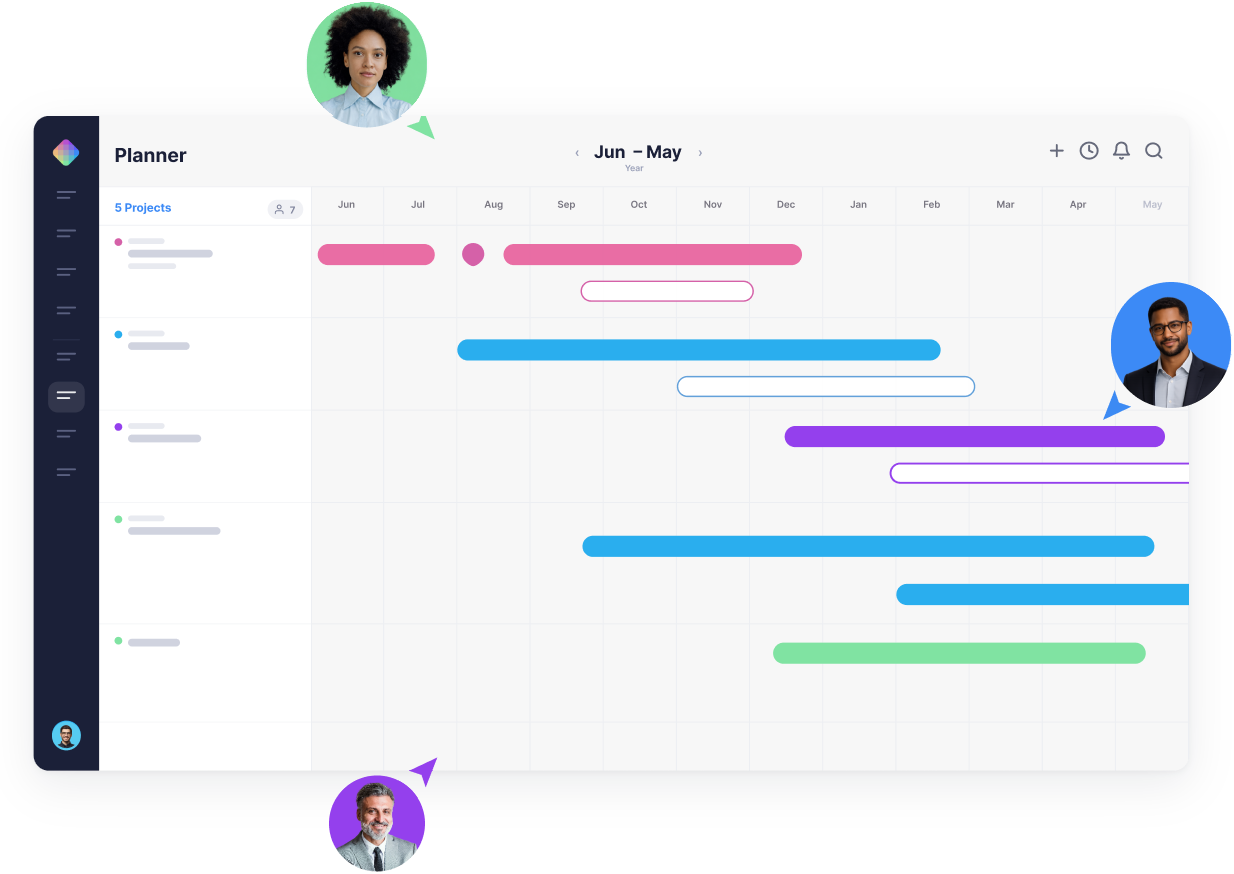
Consultants across every engagement, with project management and forecasts in the same plan.
What Mosaic plans that a task board doesn’t:
- Each consultant’s week across every engagement
- Billable and non-billable time, against utilization targets
- Engagement budgets in hours or fees
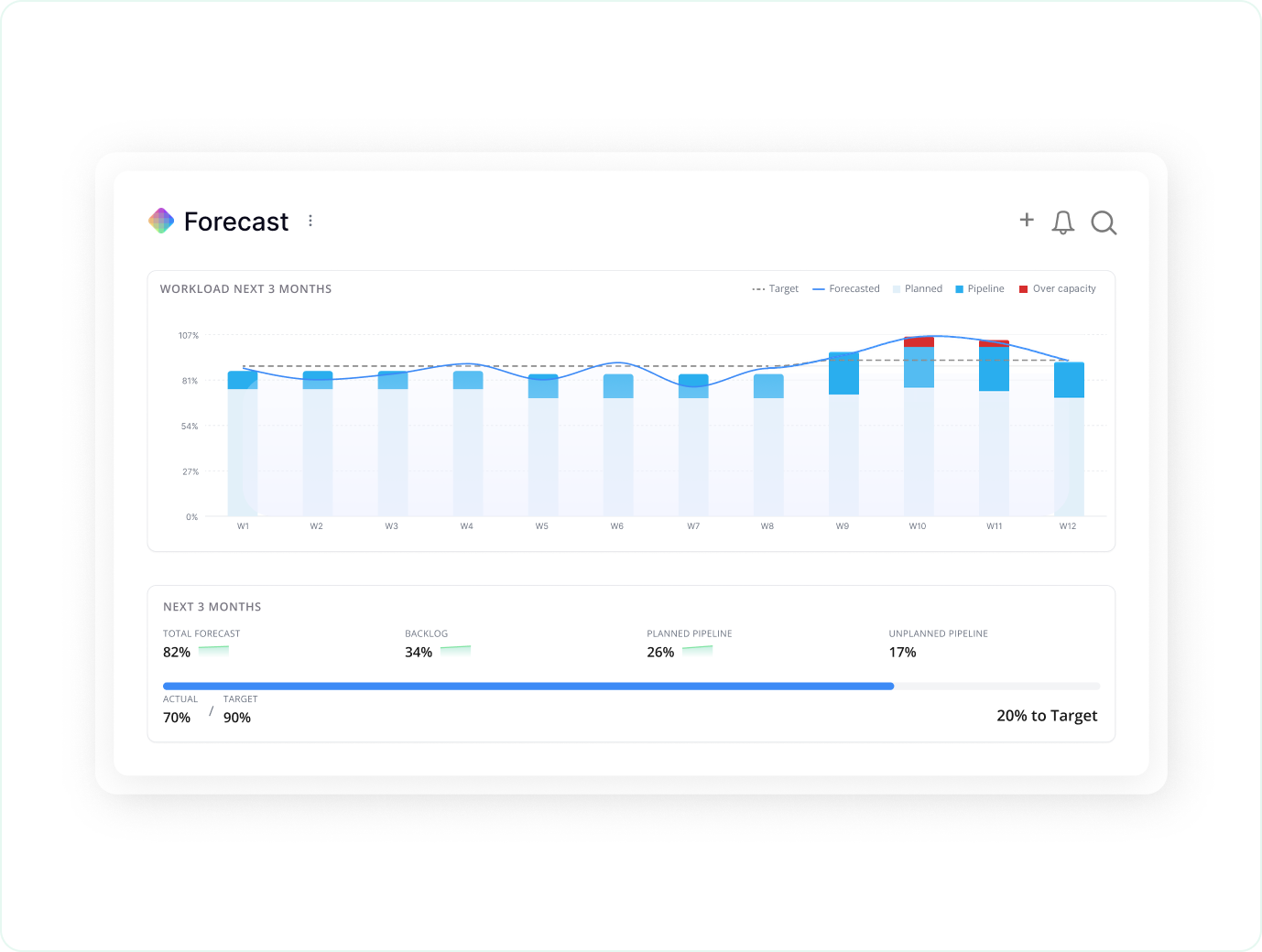
- Revenue and hiring forecasts from the live plan
- Work in the pipeline, before it’s signed
Is monday.com good for consulting firm resource planning, or do firms add a separate tool?
Consulting firms that run a few teams on boards often manage tasks in monday.com. Firms that need every consultant’s week across engagements, billable targets and forecasts usually add a resource planning tool such as Mosaic.

An ERP integration we build and run
Enterprise grade, with 99.9% reliability: Mosaic reads projects, people, roles, rates, budgets and actual hours from your ERP, and maintains the connection itself.

Every engagement in one plan
Each consultant’s week across every client and engagement, so nobody is double-booked between boards.

Engagement budgets
Each engagement planned with its budget in hours or fees, beside the people on it.

Billable targets
Planned utilization by person and role, against targets typically under 100%.
The bench, before it happens
Who rolls off next month, and which open roles they fit by skill and availability.

Chello in Microsoft Teams
Asks each manager for updates where they already work, and changes nothing without approval.
Can a work management tool track utilization for a consulting firm?
It can track time: ClickUp, for one, lists time tracking and timesheets among its features. Utilization planning is different: it needs each consultant’s planned hours across engagements, against a target by role, weeks ahead.
Mosaic plans utilization from the live plan and compares it with actual hours from the ERP, so the firm sees the next quarter while there is still time to act on it.
What results have firms seen with Mosaic?
Firms on Mosaic plan 80% or more of their billable staff capacity, against under 50% at typical firms on ERPs and spreadsheets, and a quarter of them report their most profitable year ever. CetraRuddy went from 77% to 90% utilization in its best year in 38 years, and CPL spends 75% less time managing resources.
Source: Mosaic planning data · CetraRuddy and CPL, Mosaic customers
80%+
of billable staff capacity planned at firms on Mosaic
90%
utilization at CetraRuddy, up from 77%
75%
less time managing resources at CPL
How do consulting firms add Mosaic beside a work management tool?
They connect Mosaic to the ERP first, so engagements, people and time come in, then plan the next few weeks in Mosaic while tasks stay where they are.
To switch, Mosaic imports your data, typically within 48 hours, and the ERP integration is in place within days. Firms are trained and live in 30 to 60 days.
Mosaic vs. all-in-one work management tools · Mosaic vs. project management software
- Connect Mosaic to the ERP, which brings in engagements, people, roles, rates, budgets and actual hours.
- Each manager plans the next few weeks: who works on which engagement, and how much of each consultant’s time is billable.
- Keep tasks in the work management tool, and plan the consultants and forecasts in Mosaic.
- Retire the utilization spreadsheets once managers update the plan instead.

“Knowing in advance when you’re going to need to hire in order to meet future backlog is to some extent the holy grail of the professional services industry.”
For firms that live and die by planning
Mosaic is for project-driven firms that value project and resource planning, management and forecasting. When people are your most valuable resource, and they determine what you can get done and when, you want the best tool for the job: one that gives you control over delivery when deadlines matter. Without one, firms leave $10k to $20k per employee on the table every year: the profit in five more points of utilization, according to the Resource Management Institute. And there’s much more to lose.
How is Mosaic priced?
Mosaic is priced in annual parts: a per-seat subscription, a platform fee and an optional ERP integration, which Mosaic owns and maintains. Onboarding and implementation is a one-time cost, scoped to the firm’s rollout, and the team sets out all of it in one quote. Firms who plan on Mosaic typically see 10 to 20x ROI in a full year, and full-priced plans are backed by a 5x money-back guarantee. The return comes from staffing projects before the work starts rather than after.
The per-seat rate steps down as headcount increases, and the platform fee funds onboarding, training, a Customer Success Manager, support and hosting.
Speak to the team to learn more.
What else do consulting firms ask about work management tools and Mosaic?
Does Mosaic replace Asana, monday.com, ClickUp or Wrike?
Not necessarily. Firms with a task process or system they want to keep can keep tracking tasks there, and plan the people, budgets and forecasts in Mosaic. Firms whose projects run by phase and budget often do both in Mosaic.
Can a work management tool forecast revenue and hiring?
No, not for the firm: it may forecast a single project, but it plans tasks rather than hours by role and rate. Mosaic forecasts revenue and hiring from the live plan.
Does Mosaic plan engagements billed by fixed fee or by time?
Yes. Each engagement is planned with its budget in hours or fees and the people on it, however it is billed.
How long does it take to switch?
To switch, Mosaic imports your data, typically within 48 hours, and the ERP integration is in place within days. Firms are trained and live in 30 to 60 days.
Is Mosaic SOC 2 Type II?
Yes. Mosaic is SOC 2 Type II, uses encrypted, read-only ERP credentials and single sign-on, and its AI is never trained on your data.
Book a 20-minute demo
See every consultant’s week across your engagements, with forecasts built from the plan.