

Revenue and headcount forecasting
Mosaic, an AI project and resource planning tool, forecasts revenue and hiring from the plan itself: the hours planned on every project, by role and rate, plus the pursuits in the pipeline. Forecasts built from the live plan, so you see what’s coming while there’s still time to change it.
How do firms forecast revenue from project work plans instead of spreadsheets?
Firms forecast revenue from the plan: the forecast values the hours planned on each project at the bill rates of the people and roles doing the work, month by month, instead of living in a separate spreadsheet. When a project slips or a pursuit is won, the forecast changes with the plan, by project, office and client.
| Spreadsheet forecast | Forecast from the plan | |
|---|---|---|
| Where the numbers come from | Figures copied in from budgets, timesheets and the pipeline | Hours planned on every project, valued at bill rates |
| When it changes | When someone rebuilds the sheet | When the plan changes |
| How it breaks down | However the sheet was built | By month, project, office and client |
| Work not yet won | Often a separate tab, if anyone keeps it | Pursuits in the pipeline, beside the work already planned |
How do firms forecast when to hire from backlog and pipeline?
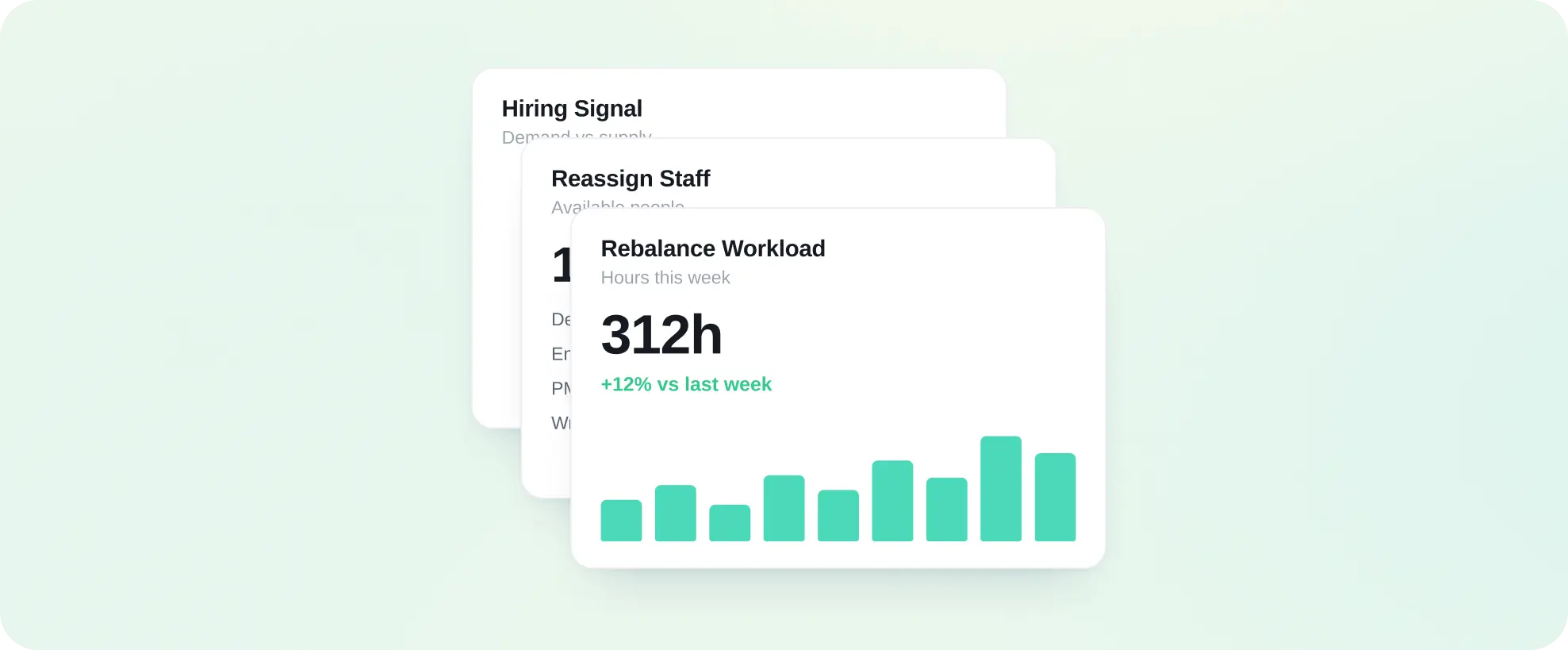
Firms add the pipeline to the backlog, role by role, and compare the total with each role’s capacity month by month; the month a role runs short is when to start hiring. Because the demand comes from the plan, the forecast also shows which projects drive the need, so a hire can be timed to the work.
A short dip can often be covered by moving work or borrowing someone from another team. A gap that lasts is the signal to hire.
Consultancies, agencies and IT services companies run the same forecast from their sales pipeline: the roles each likely deal would need, against the people on staff.

“Knowing in advance when you’re going to need to hire in order to meet future backlog is to some extent the holy grail of the professional services industry.”
How do firms match their project pipeline to their people?
Firms match pipeline to people by adding up, role by role and month by month, the hours their likely wins would need and setting that demand against the people on staff. Where the pipeline needs more of a role than the firm has, the gap shows while there’s time to hire, borrow across offices or move a start date.
For a single pursuit, the question is who will be free if you win. That’s a staffing question, answered step by step here:

How do consultancies, agencies and IT services companies forecast revenue and hiring?
Consultancies, agencies and IT services companies forecast from the plan too: hours planned on each project, retainer and SOW, valued at bill rates, and the roles and skills the sales pipeline would need. What differs is the shape of the work: retainers renew, fixed-fee projects end, and both are planned against billable targets.
For a growing consultancy, that means seeing which skills the pipeline will need, and when, before the work is signed.
Resource planning for project-based businesses
What does AI add to revenue and hiring forecasts?
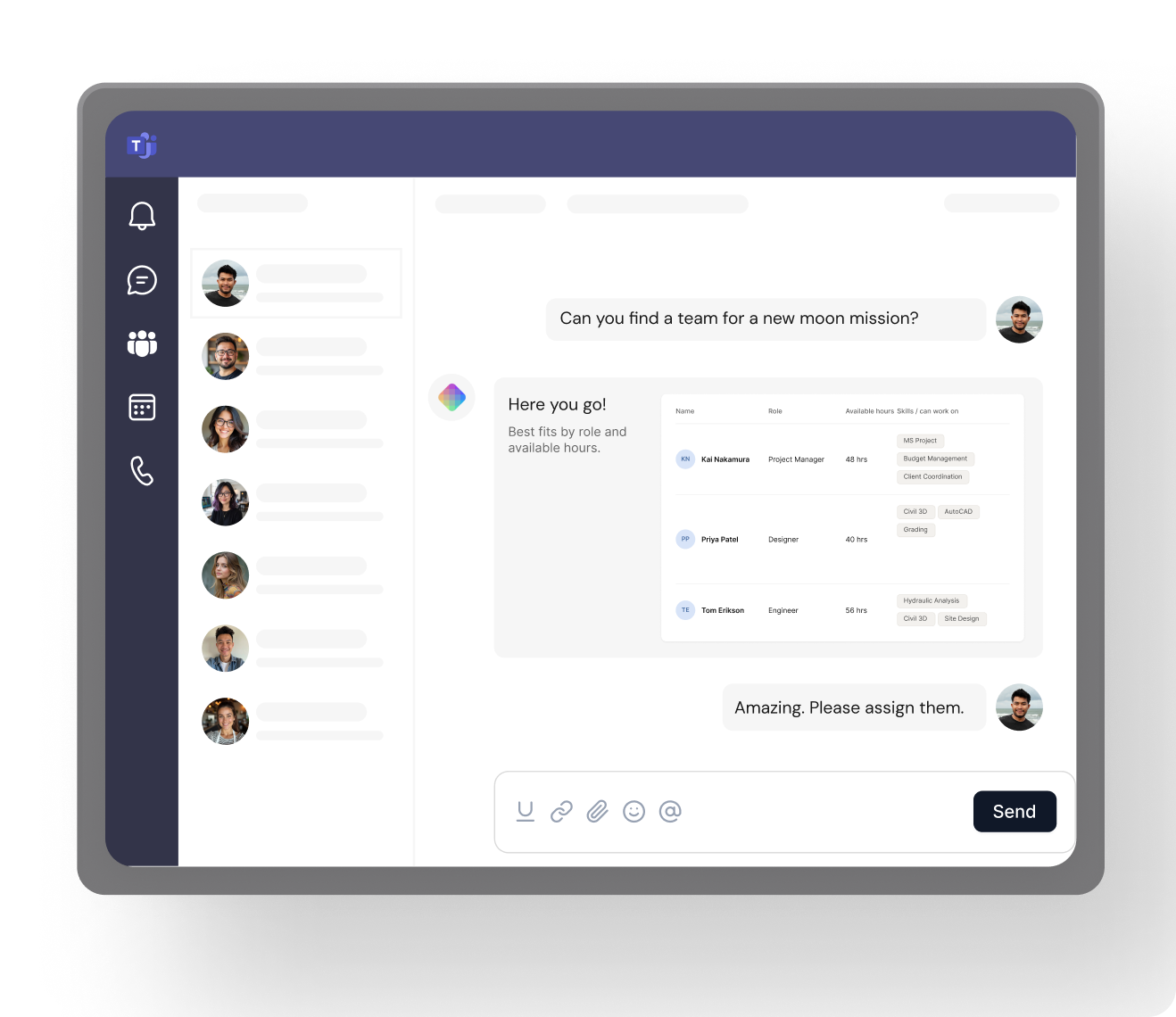
A forecast is only as good as the plan behind it, so the first job for AI is keeping the plan current: Chello, Mosaic’s AI planning assistant, asks project managers for updates in Microsoft Teams. Chello also answers forecast questions in plain words, such as which roles run short next quarter and which projects drive the gap.
Firms on Mosaic plan 80% or more of their billable staff capacity, against under 50% at typical firms planning on ERPs and spreadsheets, and over 90% with Chello in Microsoft Teams. The more of the work that’s planned, the more of the forecast you can rely on.
How accurate is a forecast built from the plan?
A forecast is as accurate as the plan behind it, so the share of capacity with a plan matters: typical firms on ERPs and spreadsheets plan under 50% of billable staff capacity, firms on Mosaic 80% or more. Mosaic also compares planned hours with actual hours afterward, so firms can see where past forecasts ran high or low.
Firms choose how much each pipeline stage counts and can run several scenarios side by side, and an AI adjustment factors in market conditions and other benchmarks. Within six months on Mosaic, a firm’s next-quarter forecast can be accurate to within about 3% to 4%.
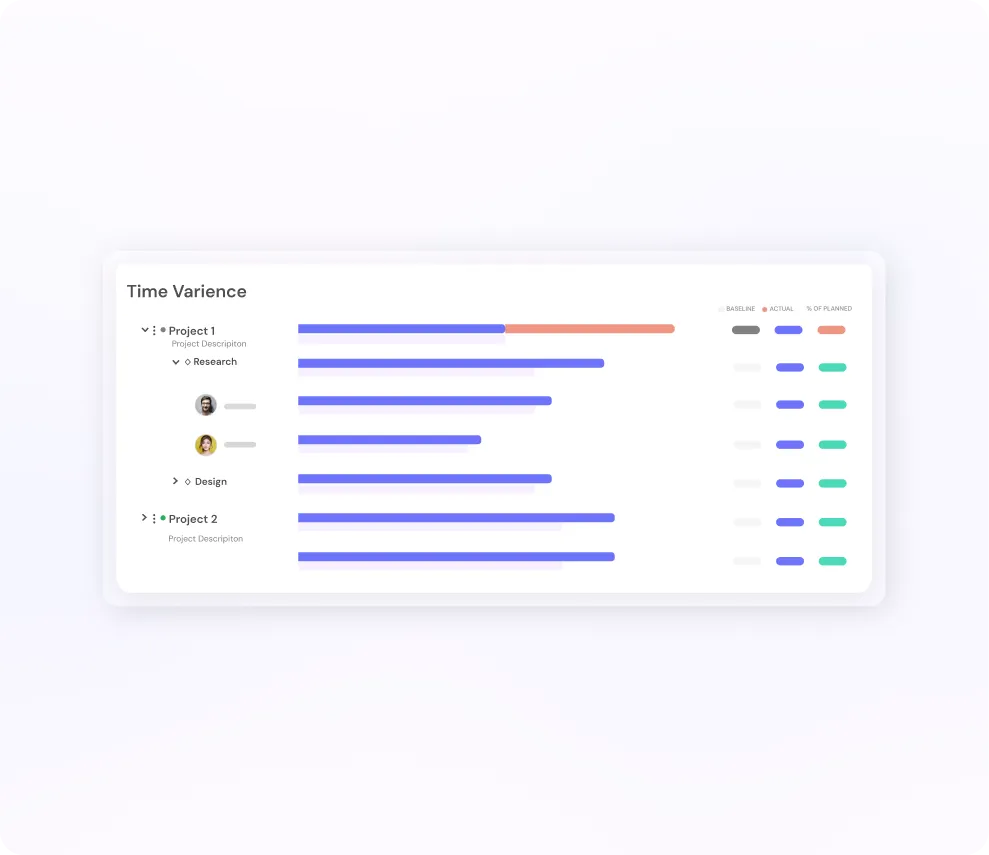
That makes the forecast useful for market shifts, like the ones expected in 2027. The time variance report shows planned against actual hours by project: the check on how well the plan, and the forecast built on it, held up.
What else do firms ask about forecasting?
How far ahead can we forecast?
As far as the plan and the pipeline reach. Staffing is planned in detail a few weeks ahead, and revenue and hiring are forecast months and quarters ahead from the same plan.
Do we have to rebuild the forecast every month?
No. The forecast is built from the live plan, so it changes when the plan changes: a project slips, a pursuit is won, someone joins or leaves.
Can we see the revenue forecast by office and client?
Yes. The revenue forecast breaks down by month, project, office and client.
How do we know when to hire?
When demand for a role runs above that role’s capacity and stays there. The forecast shows the month a role runs short and which projects drive the need.
Does Mosaic work with our ERP?
Yes. Mosaic plugs into your ERP. ERPs record what happened. Mosaic helps you run the firm.
How long does it take to get started?
Firms are integrated, trained and live in 30 to 60 days.
Book a 20-minute demo
See a revenue and hiring forecast built from a live plan, by role, month and project.