
Capacity planning and utilization
Utilization rises when the plan is complete. Mosaic, an AI project and resource planning tool, shows every person’s capacity against every project, weeks ahead, so firms fill the gaps before they turn into unbilled time. CetraRuddy went from 77% to 90% utilization and had its best year in 38 years.
Can resource planning raise utilization?
Yes, because gaps in the plan tend to become unbilled time: when every person’s next few weeks are planned across every project, gaps show up early enough to fill with billable work instead of turning into bench time. Planning is the key to increasing utilization.
CetraRuddy went from 77% to 90% utilization, 13 points, and CESO raised production-staff utilization 2 points. Here is what one point is worth.
| Step | Calculation |
|---|---|
| Available hours | 100 people × 1,800 hours = 180,000 hours a year |
| One point of utilization | 1% of 180,000 = 1,800 billable hours a year |
| What one point is worth | 1,800 hours × the firm’s average billing rate |
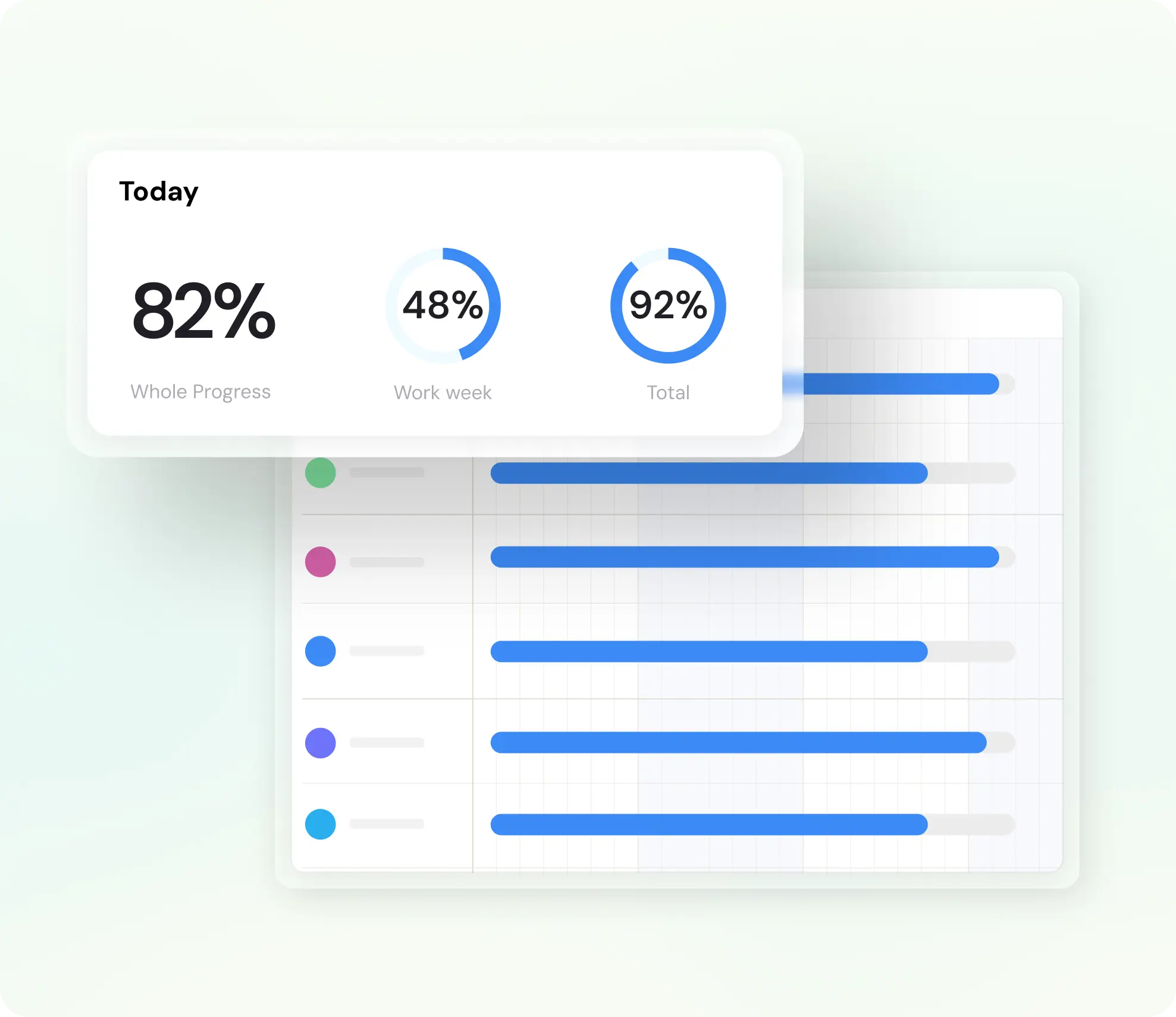

“Everyone here thinks that resource planning is the key to solving all of our problems. And I agree.”
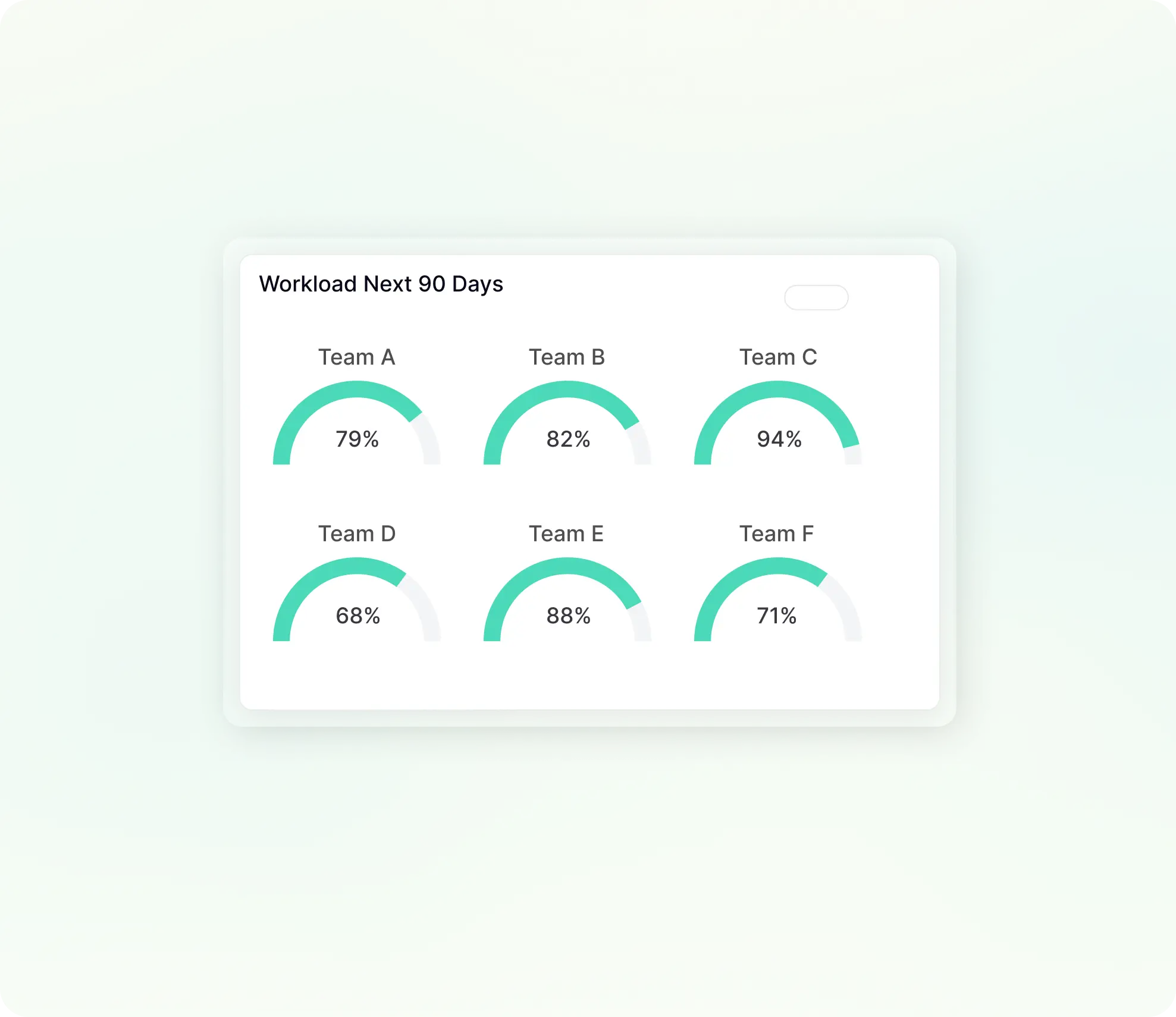
How do firms calculate utilization?
Utilization is billable hours divided by available hours, after PTO and holidays come out of the available hours. Planned utilization looks forward from the schedule and actual utilization looks back at time entries, and firms track both by person, role, department and office.
Some firms call it chargeability. The terms overlap, but firms differ on what counts, such as whether proposal hours are chargeable, so the definition matters more than the name. Mosaic reports planned utilization from the schedule and actual utilization from time entries, with PTO and holidays taken out of capacity.
What is utilization rate? · Everything you need to know about utilization
What utilization rate should architecture and engineering firms target?
Architecture and engineering firms usually set utilization targets by role, highest for production staff and lowest for principals. Firm-wide, PSMJ’s 2026 benchmark survey of more than 320 AEC firms put labor utilization at 57.5% for 2025, and Deltek’s 2026 Clarity study of 896 A&E firms found it just under 60%. Firms on Mosaic generally run 5 to 10 points above average utilization.
Principals’ time goes to clients, pursuits and running the firm. A firm-wide rate includes them, PMs and support staff, so it sits below the targets set for production staff. Set each role’s target first; the firm-wide number follows from the mix.
Sources: PSMJ, 2026 A/E Financial Performance Benchmark Survey, covering 2025; Deltek, 47th annual Clarity Architecture & Engineering Industry Study, May 2026.
Should firms schedule people to 80% or 100% of capacity?
Plan 100% of each person’s time, billable and non-billable, including admin, business development and training, so the plan matches the week they will actually have. Billable targets are set separately by role, well under 100%, and the gap between the two is where non-billable work lives.
Chello, Mosaic’s AI planning assistant, works toward that plan 2 to 4 weeks out: every person’s time accounted for, so the gaps that would become unbilled time show up while they can still be filled.

How far ahead do well-run firms plan?
The planning benchmark Mosaic works to is 90% of billable staff capacity planned 30 days out, with Chello. Typical firms plan under 50% of billable staff capacity, firms on Mosaic plan 80% or more, and firms with Chello in Microsoft Teams plan over 90%.
Share of billable staff capacity with a plan, firm-wide.
Under 50%
typical firms on ERPs and spreadsheets
80%+
firms on Mosaic
Over 90%
with Chello in Microsoft Teams

How should capacity decide go/no-go on a pursuit?
Check who is free in the pursuit’s window before committing, by role and discipline, rather than after the work is won. Add the pursuit to the forecast as a pipeline project, so its demand sits next to the work already planned and the gap shows before the go/no-go meeting.
What’s the difference between capacity planning and workforce planning?
Capacity planning covers the next weeks and months and answers who is free; workforce planning covers quarters and answers which roles to hire, and when. Mosaic does both from the same plan, so a hiring decision rests on the same data as next week’s staffing.
Capacity planning
Weeks to months ahead. Who is free, who is overloaded, and where the next project fits.
Workforce planning
Quarters ahead. Which roles to hire, when, and which projects drive the need.

Both, from one plan: the staffing view and the hiring forecast read the same schedule.
What else do firms ask about capacity and utilization?
What’s a good utilization rate?
It depends on the role: production staff carry the highest targets and principals the lowest. Firm-wide, PSMJ’s 2026 benchmark survey of more than 320 AEC firms put labor utilization at 57.5% for 2025, and Deltek’s 2026 Clarity study found it just under 60%. Firms on Mosaic generally run 5 to 10 points above average utilization.
Does Mosaic track utilization or plan it?
Both. Mosaic plans utilization forward from the schedule and tracks it backward from time entries, so firms see where they are headed and where they landed.
Can we see utilization by office, department or role?
Yes. Utilization can be viewed by person, role, department and office.
How far ahead should we plan?
Two to four weeks out, plan 100% of each person’s time. The planning benchmark is 90% of billable staff capacity planned 30 days out, with Chello.
Does Mosaic work with our ERP?
Yes. Mosaic plugs into your ERP. Firms are integrated, trained and live in 30 to 60 days.
Book a 20-minute demo
See your firm’s capacity weeks ahead, by person, role and office.