

Resource and capacity planning for teams on Asana
Asana runs the work: the projects, tasks and due dates each team tracks. Planning the people across every project and client is a different job. Mosaic, an AI project and resource planning tool, plans those people by role, skill and availability, and forecasts revenue and hiring from the plan. It integrates with Asana and brings in your projects and tasks, so the time spent on them is tracked in Mosaic while Asana keeps running the work.
Asana tracks tasks and due dates for each team. Companies that sell their people’s time also plan by role and skill across every client, with budgets and forecasts. We make Mosaic, so this page says which fits.
What does Mosaic bring in from Asana?
Your Asana projects and tasks, with who each task is assigned to and when it’s due, so your teams can track the time they spend on them in Mosaic. In Mosaic, only the time is edited: the tasks stay as Asana has them. Changes in Asana reach Mosaic within three hours.
With the tasks and time from every project in one place, Mosaic builds a resource planning schedule across all your projects, so you see each person’s actual workload.
| In Asana | In Mosaic |
|---|---|
| Team members | People, with name and email |
| Projects | Projects, with name, ID, notes, and start and due dates |
| Sections | Phases |
| Milestone tasks | Milestones |
| Tasks | Tasks, with name, notes, assignee, start and due dates, and whether they’re complete |
Can Asana handle capacity planning across many projects?
For one team’s tasks, Asana shows who is doing what and when it’s due. Across many projects and clients, with roles, billable targets, budgets and forecasts, companies plan the people beside Asana.
In Mosaic, a delivery lead sees who is free next month before committing to new work, and the forecast moves with each decision.
Projects, tasks and due dates for the team doing the work.
People across every project and client, with forecasts from the plan.
What Mosaic plans beside Asana:
- Each person’s week across every project and client, by role and skill
- Tasks brought in from Asana, with the time spent on each
- Retainers, fixed fees and SOWs, with budgets in hours or fees
- Billable and non-billable time, against targets by role
- Work in the pipeline, before it’s won
- Revenue and hiring forecasts from the live plan
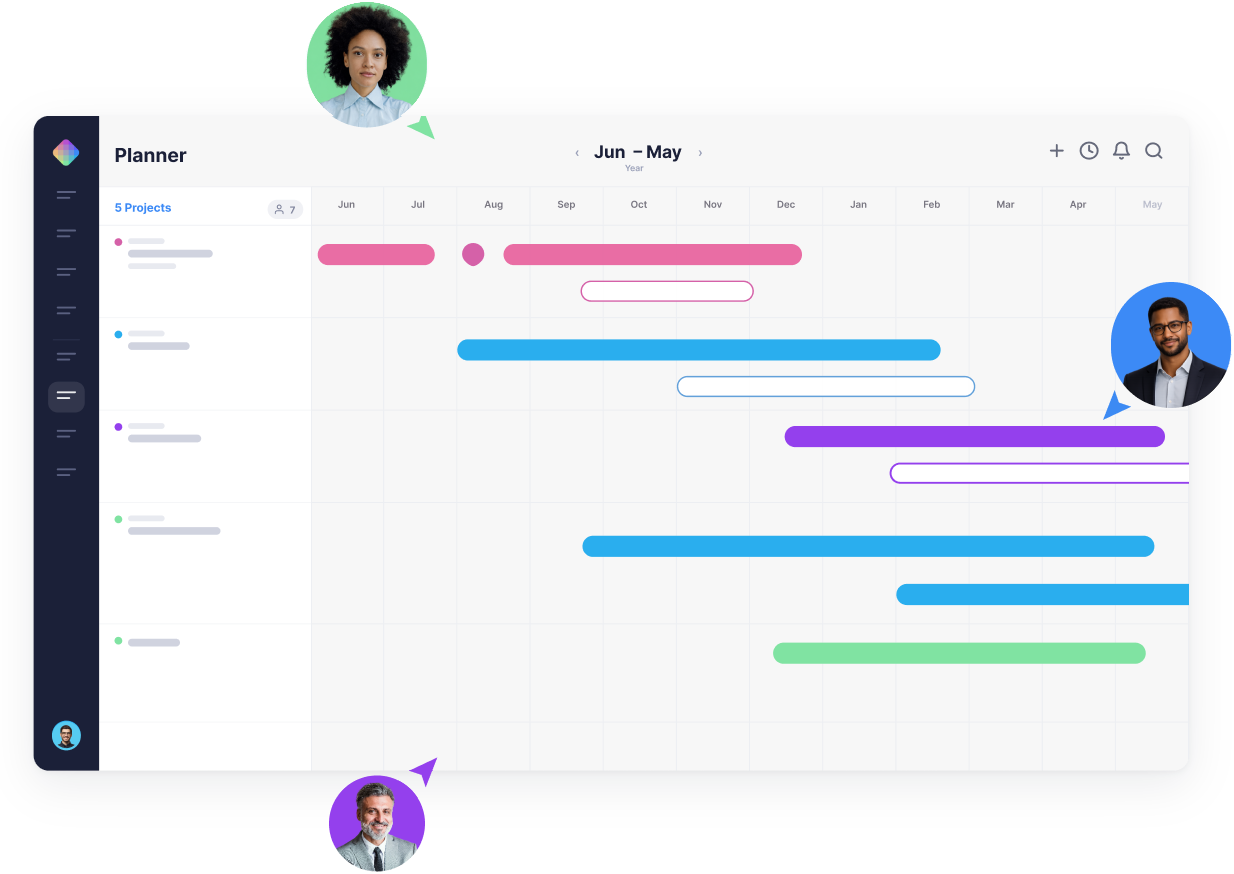
What does a resource planning tool add for a company on Asana?
The reasons agencies, consultancies and IT services companies plan in Mosaic beside Asana.

An ERP integration we build and run
Enterprise grade, with 99.9% reliability: Mosaic reads projects, people and time from your ERP, and maintains the connection itself.

Staffing by skill
Open roles filled with people who fit by role, skill and availability, across every client.

Billable targets
Planned utilization by person and role, against targets typically under 100%.

Forecasts
Revenue by month and demand by role, built from the hours planned on every project.
Chello in Microsoft Teams
Chello, Mosaic’s AI planning assistant, asks each manager for updates where they already work, and changes nothing without approval.

An Asana integration
Mosaic brings in your Asana projects and tasks, so your teams track the time spent on them and the plan shows actual workload across every project.
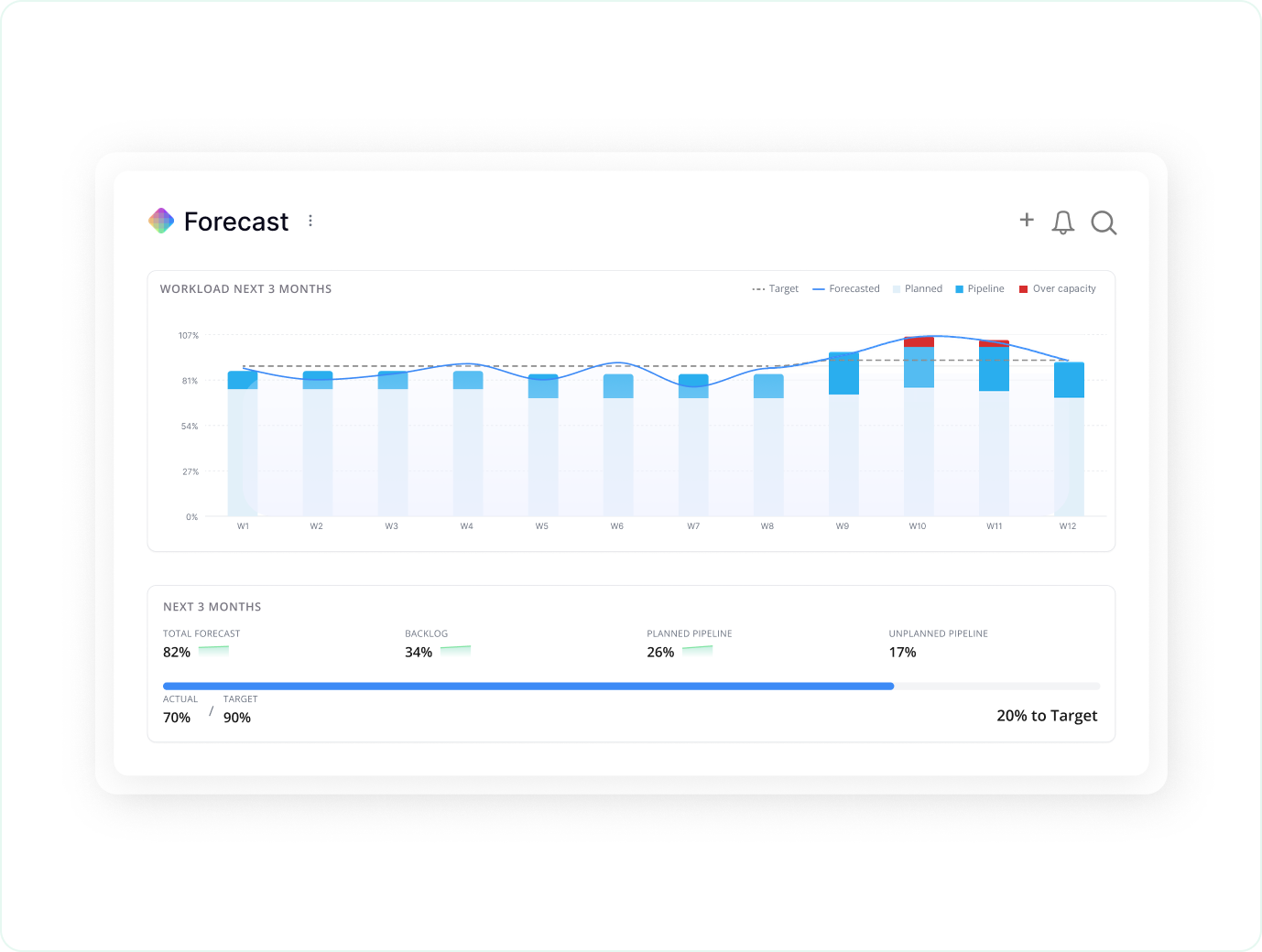
How does a company on Asana forecast hiring from its client work?
From the plan: hours planned on every project, by role and bill rate, give revenue by month, and demand by role against capacity shows which roles run short, and when. Pipeline work can sit in the plan before it’s won.
Within four months on Mosaic, a company’s next-quarter forecast can be accurate to within about 3% to 4%.
What results have firms seen with Mosaic?
Firms on Mosaic plan 80% or more of their billable staff capacity, against under 50% at typical firms on ERPs and spreadsheets, and a quarter of them report their most profitable year ever.
Source: Mosaic planning data
80%+
of billable staff capacity planned at firms on Mosaic
Under 50%
planned at typical firms on ERPs and spreadsheets
1 in 4
firms on Mosaic report their most profitable year ever
How does a company on Asana start planning in Mosaic?
Companies connect Asana and, if they run one, their ERP, so projects, tasks, people and time come in. Then each lead plans the next few weeks in Mosaic while Asana keeps running the work.
Mosaic imports your data, typically within 48 hours. Companies are trained and live in 30 to 60 days.
Mosaic vs. Asana, monday.com, ClickUp and Wrike · Resource and capacity planning for teams on Jira · Resource planning that works with your ERP
- Create a personal access token in Asana, enter it in Mosaic’s integration settings and pick the workspace.
- On a short review call, Mosaic’s team checks that projects and tasks came across as your teams use them.
- Connect your ERP if you run one, which brings in people, roles, rates and time.
- Each lead plans the next few weeks: who works on which project, and how much of each person’s time is billable.
- Check planned utilization by role, and hire before the roles run short.

“Knowing in advance when you’re going to need to hire in order to meet future backlog is to some extent the holy grail of the professional services industry.”
For project-driven firms
Mosaic is for firms that live and die by planning effectively, and that value project and resource planning, management and forecasting. When people are your most valuable resource, and they determine what you can get done and when, you want the best tool for the job: one that gives you control over delivery when deadlines matter. Without one, firms leave $10k to $20k per employee on the table every year: the profit in five more points of utilization, according to the Resource Management Institute. And there’s much more to lose.
How is Mosaic priced?
Mosaic is priced per seat and billed annually, at standard rates that are the same for every firm. A seat’s price doesn’t depend on the person’s role, and the per-seat rate comes down as the seat count grows, at the same steps for every firm. One annual subscription covers the seats, the platform (onboarding, training, a Customer Success Manager, support and hosting) and any ERP integration, which Mosaic owns and maintains. Setup and implementation are a one-time cost, scoped to the firm’s rollout and listed on the quote before the firm signs. Firms who plan on Mosaic typically see 10 to 20x ROI in a full year, and 12-month contracts that run Chello, Mosaic’s AI planning assistant, in Microsoft Teams are backed by a 5x money-back guarantee. The return comes from staffing projects before the work starts rather than after.
Speak to the team to learn more.
What else do companies on Asana ask about resource planning?
Does Mosaic integrate with Asana?
Yes. Mosaic brings in your Asana projects, sections, milestones and tasks, with who each task is assigned to and when it’s due. Asana keeps running the work.
Does Mosaic replace Asana?
No. Asana keeps the tasks, and Mosaic plans the people: who works on which project, and when.
Do changes in Mosaic go back to Asana?
No. Only the time spent on each task is edited in Mosaic. The tasks stay as Asana has them, and Asana stays where they’re managed.
How long does it take to get started?
Mosaic imports your data, typically within 48 hours. Companies are trained and live in 30 to 60 days.
Is Mosaic SOC 2 Type II?
Yes. Mosaic is SOC 2 Type II, supports single sign-on and two-factor authentication, encrypts your data in transit and at rest, and the AI models it uses aren’t trained on your firm’s data.
Book a 20-minute demo
See your people planned across every project and client, while Asana keeps running the work.