

Runn alternatives for consulting firms and agencies
Consulting firms and agencies look for a Runn alternative when the plan has to start from the ERP the firm already runs and keep itself current as the firm grows. Mosaic, an AI project and resource planning tool, plans people, budgets and forecasts from the data in that ERP.
The right alternative depends on where your projects, people and time already live. We make Mosaic, so Runn is described here from its own website, as of November 2026, and each option says which firms it fits.
Why do consulting firms look for a Runn alternative?
Consulting firms usually look for a Runn alternative when the plan has to read engagements, people, rates and hours from the ERP, and stay current without someone chasing updates. Runn describes itself as resource management and capacity planning software for teams planning people across technical projects.

An ERP integration we build and run
Enterprise grade, with 99.9% reliability: Mosaic reads projects, people, roles, rates, budgets and actual hours from your ERP, and maintains the connection itself.

A plan that stays current
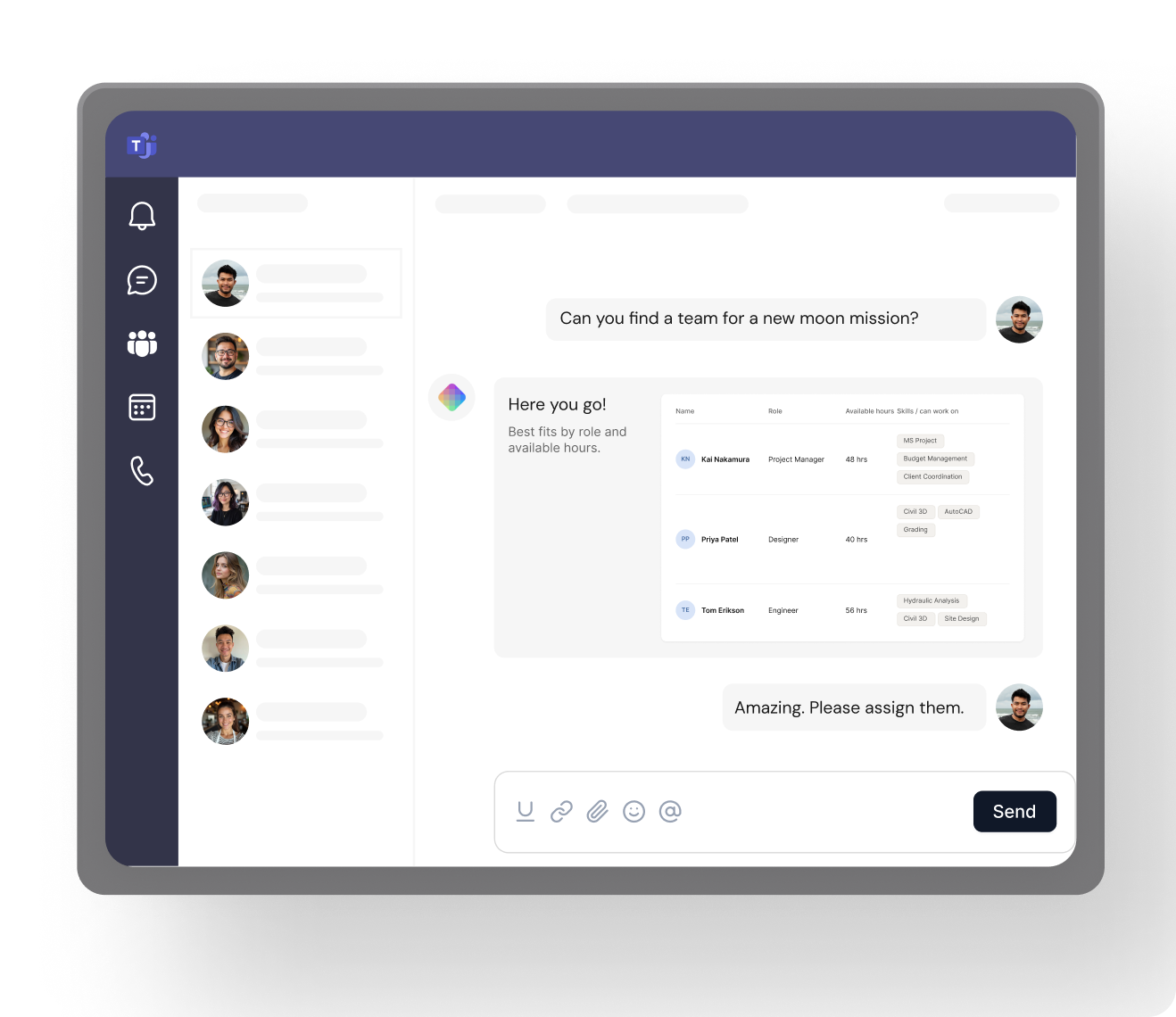
Chello, Mosaic’s AI planning assistant, asks each manager for updates in Microsoft Teams and changes nothing without approval.

Forecasts from the plan
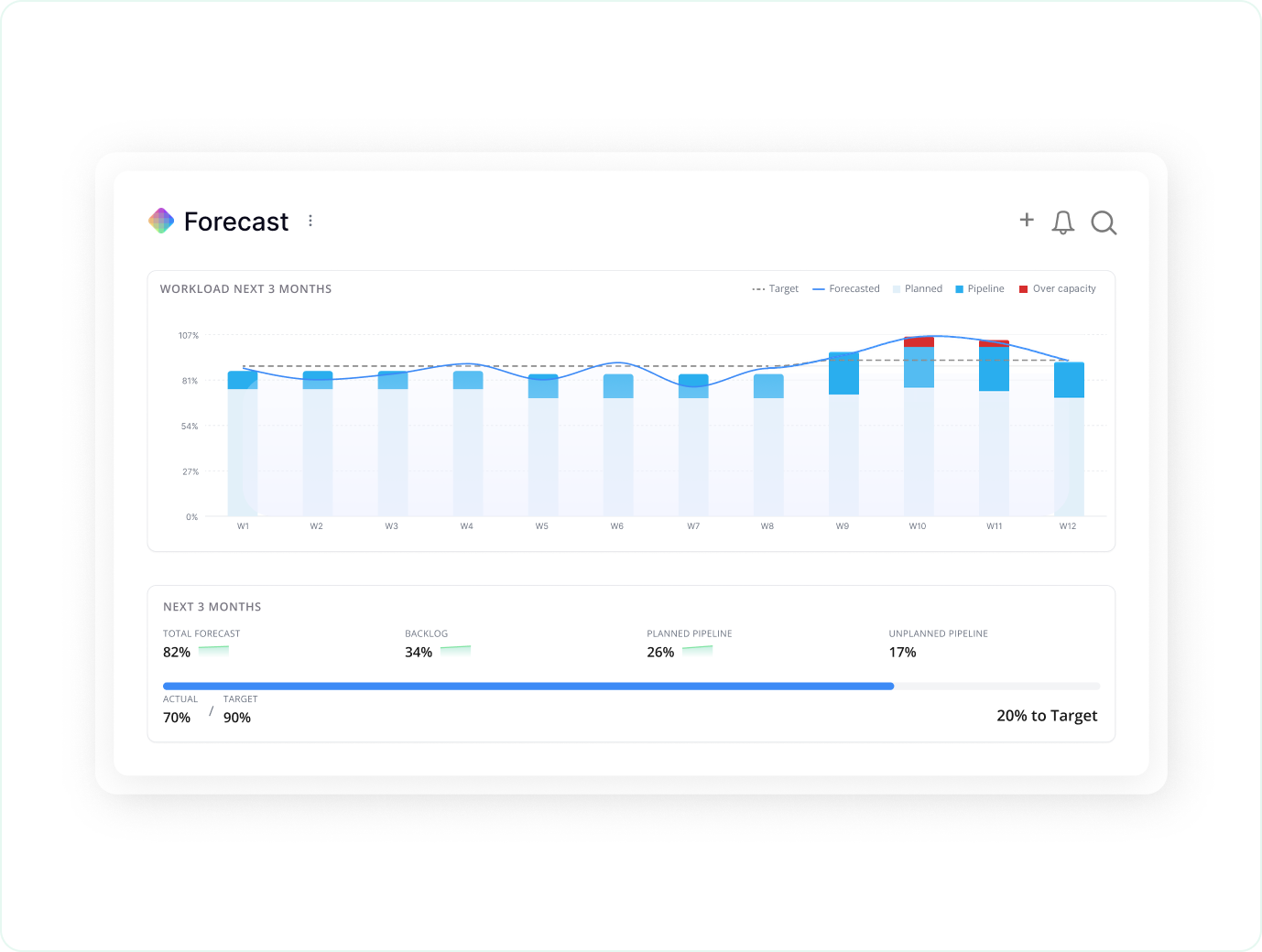
Mosaic AI forecasts revenue, utilization and hiring from the live plan. Within four months, a firm’s next-quarter forecast can be accurate to within about 3% to 4%.
Patented rescheduling
When a phase’s dates change, patented automatic rescheduling moves the work that follows it.

Every office in one plan
Offices, teams and practices share one plan, so people can be lent across them.

Sign-in and audit
Single sign-on, granular permissions, an activity log and approvals, for every customer.
What are the alternatives to Runn for a consulting firm?
Consulting firms usually weigh three kinds of alternative: a resource planning tool that plugs into the ERP, such as Mosaic, a PSA suite that also runs time and billing, or another scheduling and forecasting tool. Which fits depends on whether the firm runs an ERP for time, billing and accounting.
| Option | What it does | Fits firms that | Keep in mind |
|---|---|---|---|
| Mosaic | Plans people by role, skill and availability across every engagement, and forecasts revenue and hiring, starting from the data in your ERP | Run an ERP such as NetSuite, Microsoft Dynamics 365 or Deltek, or are moving to one | No invoicing or accounting: your ERP keeps those |
| A PSA suite | Projects, time, billing and resource management in one product | Want one product to run delivery and finance together | A larger rollout, since it replaces more of the firm’s systems |
| Another scheduling tool | Who’s booked on what, week by week | Mostly need a shared calendar of people | A schedule isn’t a forecast: revenue and hiring get worked out somewhere else |
| Staying on Runn | Scheduling, project planning with budgets, capacity, forecasting, timesheets and reporting, by its own description | Want a planning and forecasting tool with timesheets inside it | Connects to other systems through its API and an integrations marketplace, by its own description |
How do Runn and Float compare for agency resource planning, and where does Mosaic fit?
Both plan people across projects. Float describes its Schedule as a live, visual resource scheduling tool, and Runn adds project financials and forecasting, by its own description. Agencies whose plan also has to carry retainers, budgets and forecasts from their finance software have a third option, Mosaic.
Freelancers sit in the same plan as staff in Mosaic, and workload by role is forecast months ahead, so an agency can decide early whether to hire, bring in freelancers or move start dates.
Float alternatives · Resource management software for agencies
Float, Kantata or Runn for a 200-person consulting firm?
At 200 people the deciding question is usually the ERP. Kantata describes itself as a PSA that runs resource, project and financial management with invoicing included, while Float and Runn plan people and leave billing elsewhere. A firm that keeps its books in an ERP often wants a planning tool that reads it.
That’s what Mosaic does: one plan for every engagement, practice and office, read from the ERP, with permissions by role and forecasts the partners can use.
Kantata alternatives · Resource management software for consulting firms
How does the plan stay current without chasing people?
Chello asks each engagement manager what changed, in Microsoft Teams, and one reply gets the plan to match reality. Firms on Mosaic plan 80% or more of their billable staff capacity, and over 90% with Chello in Microsoft Teams.
How does Mosaic forecast revenue and hiring?
From the plan: hours planned on every engagement, by role and bill rate, give revenue by month, and demand by role against capacity shows which roles run short and when to hire. Within four months on Mosaic, a firm’s next-quarter forecast can be accurate to within about 3% to 4%.
Scheduling is not forecasting: the forecast is what you do with the schedule.
How do firms move from Runn to Mosaic?
Firms run both side by side for a short time, then switch once the plan in Mosaic matches the work. To switch, Mosaic imports your data, typically within 48 hours, and the ERP integration is in place within days. Firms are trained and live in 30 to 60 days.
One Mosaic plan can read from more than one ERP, for firms that run two after a merger.
What changes when a consulting firm plans in Mosaic?
Firms on Mosaic plan 80% or more of their billable staff capacity, against under 50% at typical firms on ERPs and spreadsheets, and a quarter of them report their most profitable year ever.
Source: Mosaic planning data
80%+
of billable staff capacity planned at firms on Mosaic
Under 50%
planned at typical firms on ERPs and spreadsheets
1 in 4
firms on Mosaic report their most profitable year ever
For project-driven firms
Mosaic is for firms that live and die by planning effectively, and that value project and resource planning, management and forecasting. When people are your most valuable resource, and they determine what you can get done and when, you want the best tool for the job: one that gives you control over delivery when deadlines matter. Without one, firms leave $10k to $20k per employee on the table every year: the profit in five more points of utilization, according to the Resource Management Institute. And there’s much more to lose.
How is Mosaic priced for a growing firm?
Mosaic is priced per seat and billed annually, at standard rates that are the same for every firm. A seat’s price doesn’t depend on the person’s role, and the per-seat rate comes down as the seat count grows, at the same steps for every firm. One annual subscription covers the seats, the platform (onboarding, training, a Customer Success Manager, support and hosting) and any ERP integration, which Mosaic owns and maintains. Setup and implementation are a one-time cost, scoped to the firm’s rollout and listed on the quote before the firm signs. Firms who plan on Mosaic typically see 10 to 20x ROI in a full year, and 12-month contracts that run Chello, Mosaic’s AI planning assistant, in Microsoft Teams are backed by a 5x money-back guarantee. The return comes from staffing projects before the work starts rather than after.
Speak to the team to learn more.
What else do firms ask about moving off Runn?
Is Mosaic a Runn alternative?
Yes, for consulting firms and agencies that run an ERP, or are moving to one, and want the plan to start from it. Teams that mainly want a lighter scheduling and forecasting tool with timesheets inside it may be better served by Runn.
Does Mosaic do invoicing or accounting?
No. Mosaic plugs into your ERP or other finance or invoicing software, which keeps billing and accounting, and Mosaic plans the work: who works on which project, phase by phase. We feel business operations command their own software platform.
Can one plan read from more than one ERP?
Yes. One Mosaic plan can read from several ERPs at once, for firms that run two after an acquisition or a merger.
How long does the switch take?
To switch, Mosaic imports your data, typically within 48 hours, and the ERP integration is in place within days. Firms are trained and live in 30 to 60 days. A short side-by-side run lets the team check the plan before switching.
Is Mosaic SOC 2 Type II?
Yes. Mosaic is SOC 2 Type II, uses encrypted, read-only ERP credentials and single sign-on, and its AI is never trained on your data.
Book a 20-minute demo
See every engagement, person and forecast in one plan, built from the data in your ERP.