

Utilization targets for agencies and consulting firms
Targets for the people who deliver client work commonly sit in the low to mid 70s. Agencies’ production teams averaged a 72% target in 2024, and the best-run professional services firms reached 75% billable utilization in SPI Research’s 2026 benchmark. The target matters less than how it’s managed. Firms that hit theirs plan utilization weeks ahead, by person and role. Mosaic, an AI project and resource planning tool, projects it from the live plan.
Utilization here means billable hours divided by available hours. Benchmarks measure different populations, so each figure below names the one it describes. We make Mosaic, so the last sections describe how firms manage targets on it.
What billable utilization do agencies and consulting firms reach?
Recent research puts the average in the mid to high 60s, with the best-run firms at 75% or more.
| Benchmark | Population | Figure |
|---|---|---|
| Average billable utilization | Professional services organizations in SPI Research’s 2026 benchmark (509 firms) | 66.4% in 2025, down from 73.2% in 2021 |
| High-performing firms | The top performers in the same benchmark | 75.0% |
| Typical billable utilization | Client-facing services organizations, in RMI’s white paper | About 68% |
| Production teams’ target | Agencies in Promethean’s 2024 survey | 72% on average, up from 68% in 2022 |
How should a firm set utilization targets by role?
Start from each role’s available hours, then take out the time the role is meant to spend on other work: selling, managing, training and internal projects. What’s left is the billable target.
A consultant with 2,080 working hours a year and a 75% target bills 1,560 hours. A practice lead who spends half their time selling and managing might target 40%, or 832 hours.
Leaders look short and delivery staff look fine, and both readings mislead.
Each person measured against what their role is meant to bill.
What a target by role accounts for:
- Holidays and leave
- Selling and proposals
- Managing people and practices
- Training and internal projects
- Time between engagements
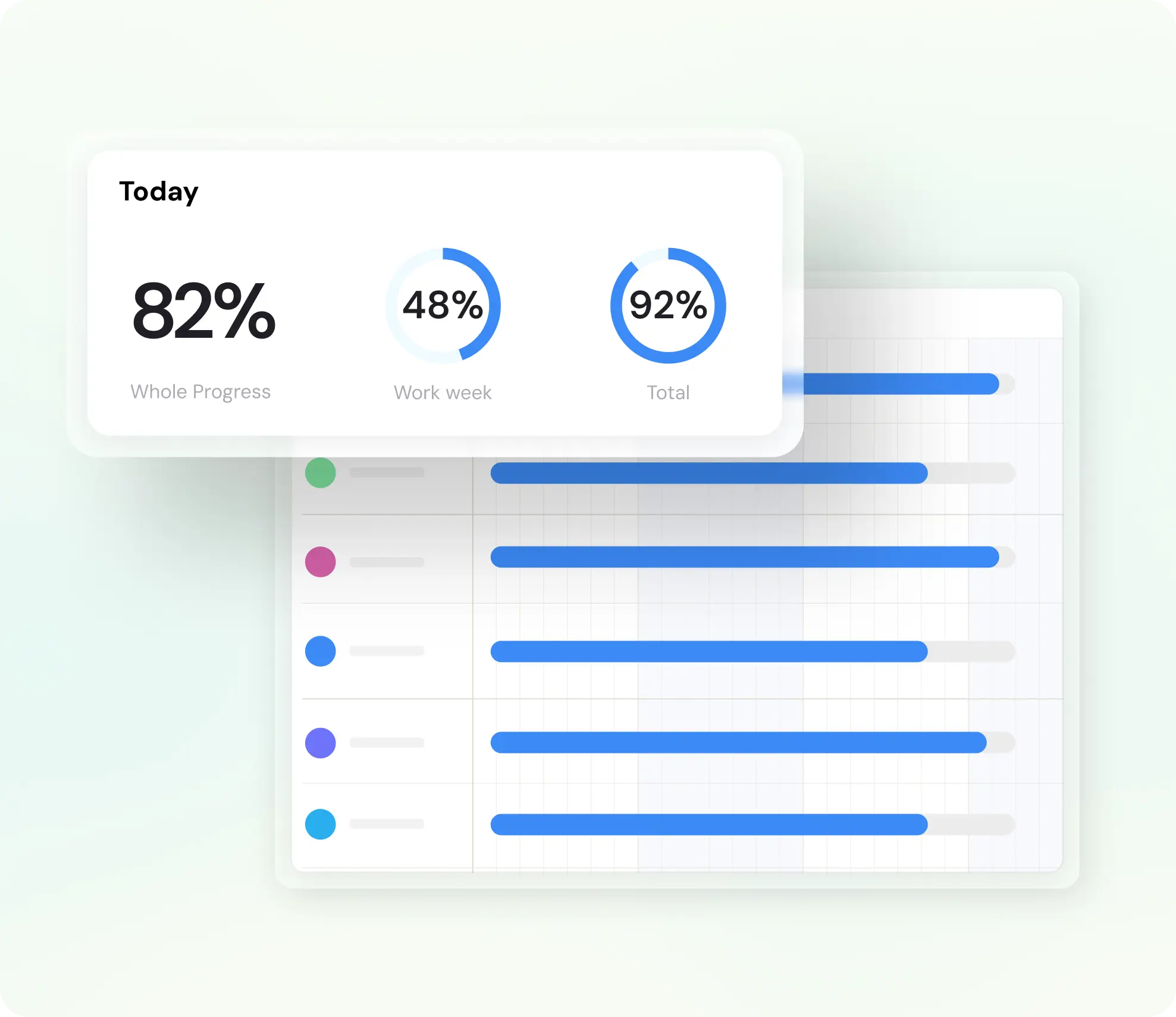
How do agencies and consulting firms manage utilization and billable targets?
Firms that hit their targets manage them forward, in the plan, rather than backward, in the timesheets.
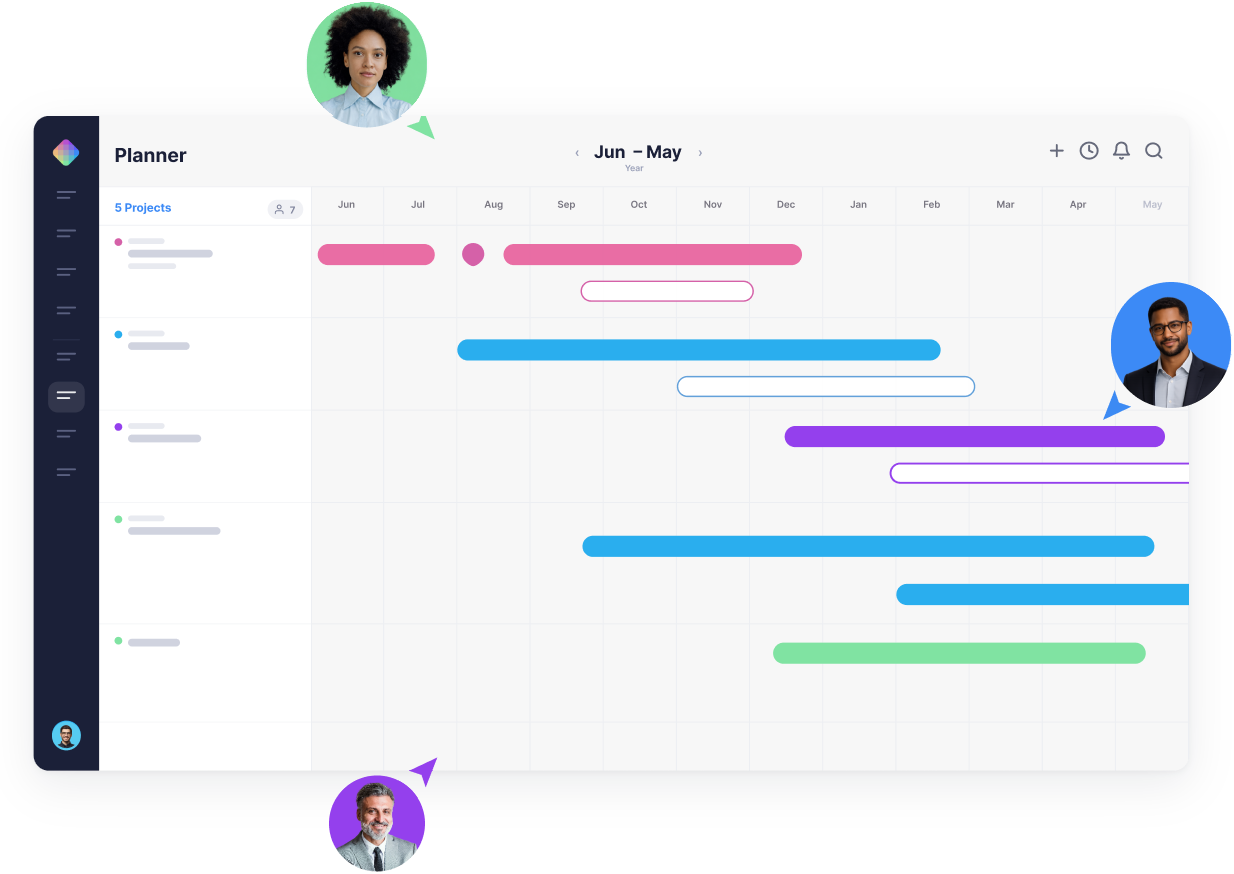
- Plan each person’s next four to six weeks, so billable hours are booked before the weeks arrive.
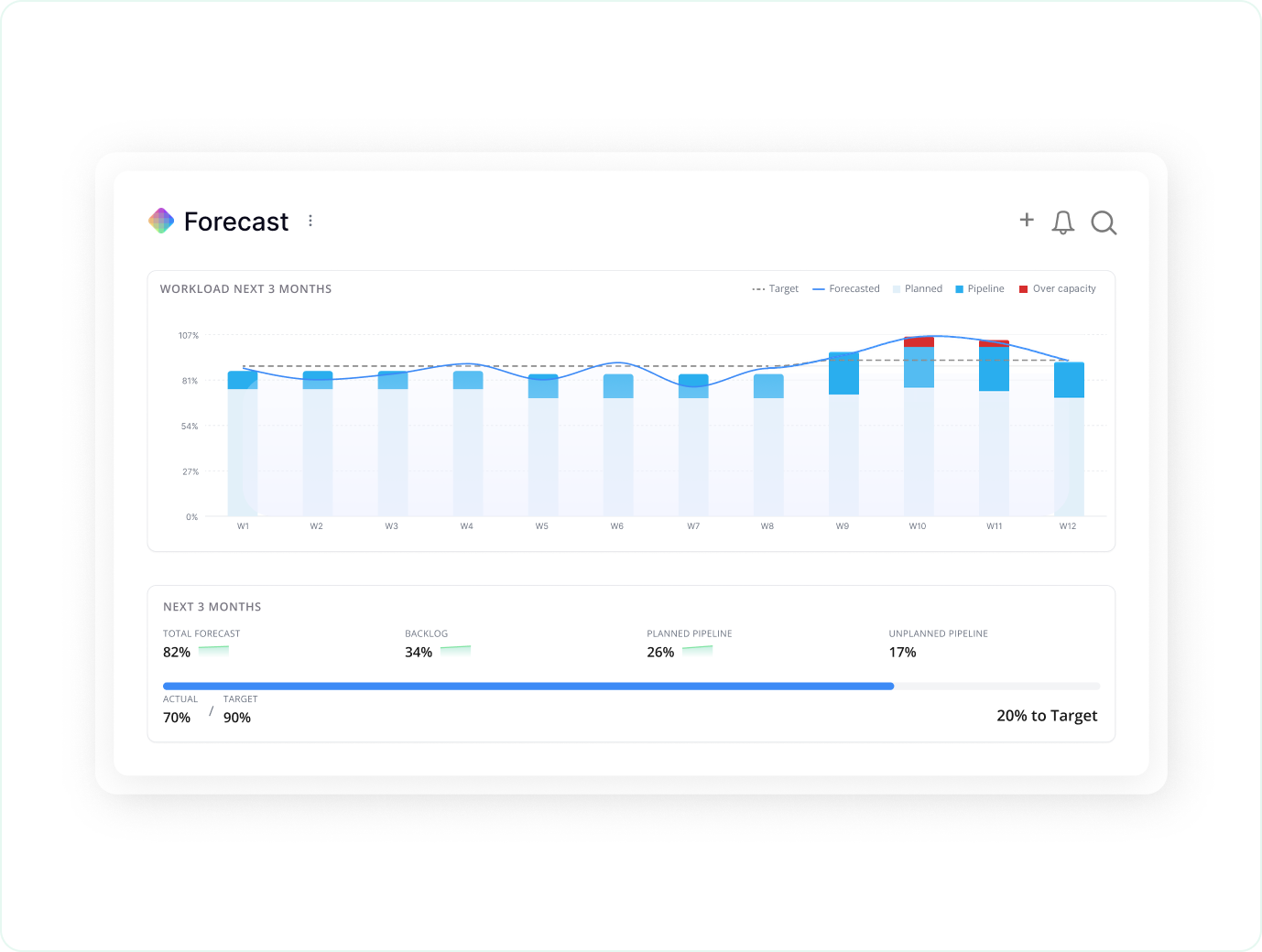
- Compare projected utilization with each person’s target, by role, team and office.
- Move work or people where someone is booked under target, or over capacity.
- Compare planned hours with actual hours each week, and fix the plan where they drift.
- Review the targets each quarter against what the roles really do.
How do consulting firms track realization and utilization together?
Utilization measures how much of a consultant’s time is billable. Realization measures how much of that billable time the firm actually bills, at its standard rates, after write-downs and discounts. A firm can hit its utilization target and still miss its margin if realization slips.
Firms track utilization in the plan, weeks ahead, and realization from billing in the finance system. Mosaic plans utilization and compares planned hours with the actual hours it reads from the ERP, and the monthly review puts the two figures side by side.
What is a point of utilization worth?
Five more points of utilization is worth $1m to $2m a year in profit per 100 people, according to the Resource Management Institute.
Utilization is an input to margin, not a proxy for it. What a point is worth depends on rates, realization and how profitable each project is.
Project margin and budgets for services firms · Capacity planning and utilization
How much of a firm’s capacity is planned at firms that hit their targets?
At the firms we see running on ERPs and spreadsheets, under 50% of billable capacity is planned. Firms on Mosaic plan 80% or more, and over 90% with Chello in Microsoft Teams. CetraRuddy went from 77% to 90% utilization and had its best year in 38 years.
Source: Mosaic customer data · CetraRuddy, a Mosaic customer
Under 50%
of billable capacity planned at firms on ERPs and spreadsheets
80%+
planned at firms on Mosaic
Over 90%
planned with Chello in Microsoft Teams

“Here we are at the end of July. And I’m trying to know what our staff is doing in October. Are we running off a cliff and nobody’s doing anything, or are we going to have so much work that we need to hire new people? Mosaic answers those questions.”
What else do firms ask about utilization targets?
What billable utilization rate should an agency target?
Agencies’ production teams averaged a 72% target in 2024, according to Promethean’s State of Digital Services survey, up from 68% in 2022. Leaders and account managers target less, since more of their time goes to clients without being billed.
What utilization rate should a consulting firm target?
High-performing professional services firms reached 75% billable utilization in SPI Research’s 2026 benchmark, against an average of 66.4%. A target near 75% for delivery consultants matches what the best-run firms reach, with lower targets for partners and practice leads, who also sell and manage.
How is billable utilization calculated?
Billable hours divided by available hours. A consultant who bills 30 hours of a 40-hour week is at 75%. Firms that take holidays and leave out of available hours report a higher figure, so say which definition a target uses.
Can utilization be too high?
Yes. Utilization held near 90% leaves no time for training, internal work or the unexpected, and it burns people out. Promethean’s agency research warns that pushing past 90% can turn small problems into big ones.
What tools help manage utilization targets?
A resource planning tool that projects utilization by person and role from the plan, compares planned with actual hours and flags people booked under target or over capacity. Mosaic does this from the data in the firm’s ERP, and Chello keeps the plan current in Microsoft Teams.
Book a 20-minute demo
See projected utilization by person and role, weeks ahead, starting from your own projects.