

Resource planning with Deltek Costpoint
Mosaic, an AI project and resource planning tool, plugs into Deltek Costpoint, so government contractors can plan who works on which contract, week by week. Costpoint keeps the books. Mosaic plans the work.
What resource planning software integrates with Costpoint for government contractors?
Mosaic plugs into Deltek Costpoint, and government contractors, including engineering and A&E firms with federal work, use it to plan their people while Costpoint stays the system of record. Mosaic isn’t an alternative to Costpoint; it’s where project managers and operations leaders plan who works on which contract next.
ERPs record what happened. Mosaic helps you run the firm.
Mosaic plugs into your ERP. Your finance team keeps running Costpoint the way it does today, and planning gets its own place, which project managers open every week.
What does Mosaic read from Deltek Costpoint?
Mosaic reads projects, phases, people, roles, budgets and fees, and time from Deltek Costpoint, so nobody keys them into a second system. Costpoint remains the system of record for time, billing and accounting, and planning, staffing and forecasting happen in Mosaic.
Recorded time shows actual hours against the plan, so project managers see which phases are using hours faster than planned.
A bi-directional Deltek Costpoint integration is coming soon.
Mosaic pulls from Deltek Costpoint four times a day. For core data, the connection can refresh as often as every minute.

Do government contractors on Costpoint use a separate project planning tool?
Many do, because an ERP is built to record what already happened, and deciding who works on which contract next needs a plan every project manager updates each week. In Mosaic, that plan sits across every contract and project, so leaders see who’s free, who’s overloaded and where a team is short, weeks ahead.
Chello, Mosaic’s AI planning assistant, asks each project manager for updates in Microsoft Teams, and one reply gets the plan to match reality.
What project management software do government contractors use with Costpoint?
Mosaic does project management as well as resource planning: project managers plan each project by phase, with the schedule on the timeline, hours by role, the people and the budget. Engineering and A&E firms with federal work plan federal and commercial projects in the same plan, so one view shows who’s free across both.
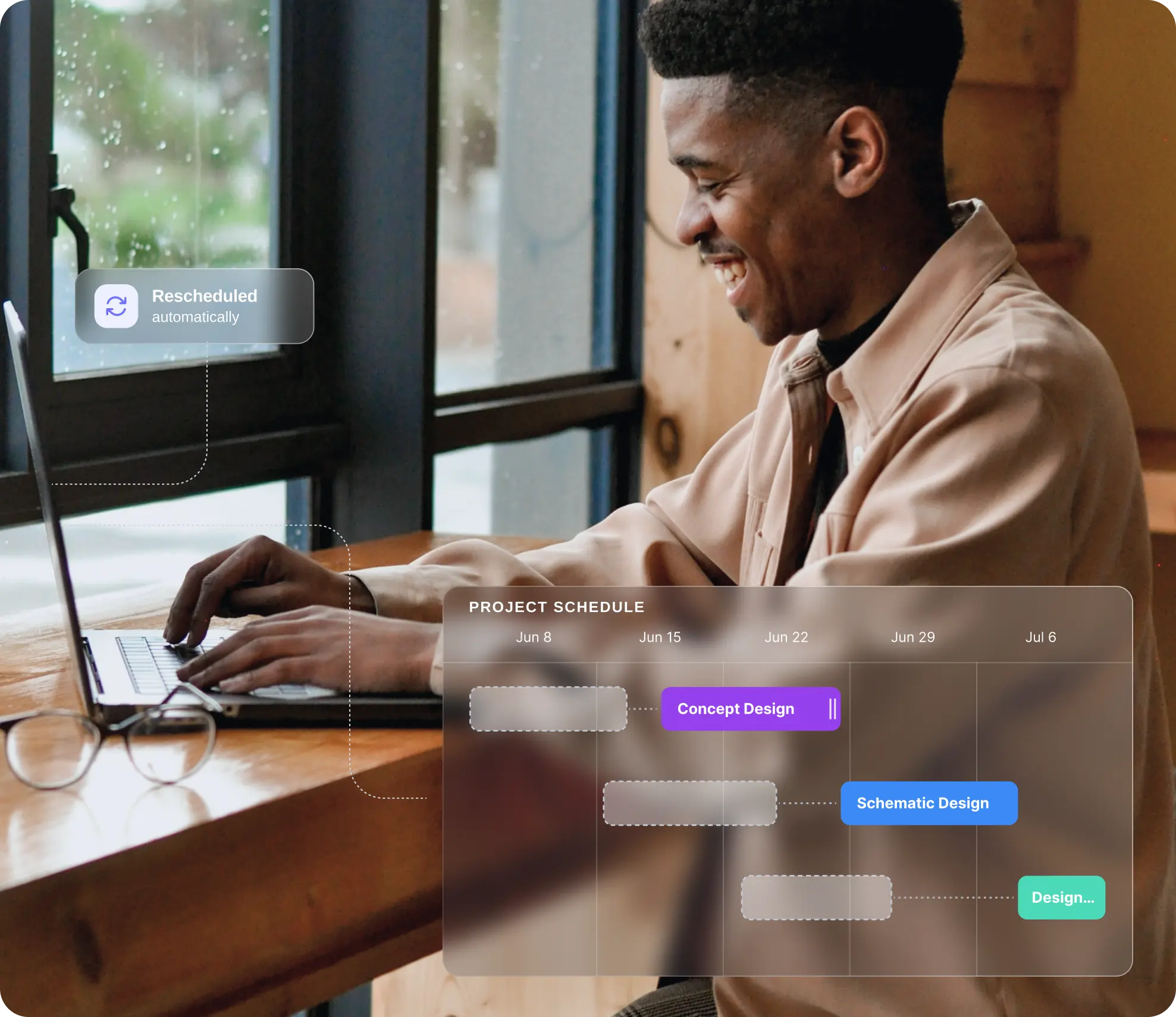
When a phase slips, Mosaic’s patented automatic rescheduling moves the work after it, and schedule variance shows leaders which projects need attention.


How do government contractors on Costpoint forecast hiring from backlog and pipeline?
Government contractors forecast hiring from demand by role on awarded contracts and on open bids set up in Mosaic, compared with the people on staff, month by month. The month a role runs short is when to start hiring, and the same forecast shows who would be free to staff a bid if it’s won.
Forecasts built from the live plan, so you see what’s coming while there’s still time to change it. Awarded contracts count as backlog and open bids as pipeline.

“Knowing in advance when you’re going to need to hire in order to meet future backlog is to some extent the holy grail of the professional services industry.”
What should IT check before connecting Deltek Costpoint?
IT at a government contractor usually checks the vendor’s security certification, what the connection reads, who can see and change what, and who maintains the connection over time. Mosaic is SOC 2 Type II, and its team sets up the Costpoint connection and keeps it working as either system changes.

What it reads
Projects, phases, people, roles, budgets and fees, and time, read from Deltek Costpoint. Costpoint stays the system of record.

Where it runs
Mosaic connects to Deltek Costpoint whether it runs in the cloud or on your own servers.

Sign-in and audit
Single sign-on, granular permissions, an activity log and approvals, for every customer.

Permissions
Access defaults to locked, and planning gets gated. Your firm decides who can see and change the plan.

Security
Mosaic is SOC 2 Type II, and the report is on Mosaic’s Trust page.
Upkeep
Mosaic builds and maintains its ERP integrations. If a platform changes their API, we fix it, not you.
What changes when a firm plans ahead in Mosaic?
Typical firms have a plan for under 50% of their billable staff capacity; firms on Mosaic plan 80% or more, and over 90% with Chello in Microsoft Teams. At CESO, an engineering firm, production-staff utilization rose 2 points after it began planning in Mosaic.
Source: Mosaic planning data; CESO, a Mosaic customer
Under 50%
of billable staff capacity planned at typical firms on ERPs and spreadsheets
80%+
planned at firms on Mosaic
+2
points of production-staff utilization at CESO
How is Mosaic priced for a government contractor on Costpoint?
Mosaic is priced in three annual parts: a per-seat subscription, a platform fee and the Costpoint integration, which Mosaic owns and maintains. Onboarding and implementation is a one-time cost, scoped to the firm’s rollout, and the team sets out all of it in one quote. Firms who plan on Mosaic typically see 10 to 20x ROI in a full year. The return comes from staffing contracts before the work starts rather than after.
The per-seat rate steps down as headcount increases, and the platform fee funds onboarding, training, a Customer Success Manager, support and hosting.
Full-priced annual contracts are backed by a 5x money-back guarantee. Speak to the team to learn more.
What else do firms on Costpoint ask?
Does Mosaic integrate with Deltek Costpoint?
Yes. Mosaic plugs into Deltek Costpoint, and Costpoint stays the system of record for the books.
Do we keep recording time and billing in Costpoint?
Yes. Time, billing and accounting stay in Costpoint, and Mosaic is where the firm plans who works on what next.
Can we plan federal and commercial projects together?
Yes. Federal and commercial projects sit in one plan, so leaders see who’s free across all of them before committing people to new work.
Can we forecast hiring for bids we haven’t won yet?
Yes. Open bids can sit in the plan as pipeline before they’re won, so the forecast shows which roles would run short if they are.
Is Mosaic SOC 2 Type II?
Yes. Mosaic is SOC 2 Type II, and access defaults to locked, so each person sees only what their permissions allow.
How long until we’re planning in Mosaic?
Firms are integrated, trained and live in 30 to 60 days. That window includes connecting Costpoint.
Book a 20-minute demo
See who’s free for the next contract, and when to hire for the backlog you’ve already won.