

When should a firm hire, and when should it bring in contractors?
Hire when the forecast shows a role running short for months on work the firm is sure of, and bring in contractors or freelancers for peaks that pass. How long the gap lasts and how certain the work is decide it. Mosaic, an AI project and resource planning tool, forecasts demand by role from booked and pipeline work, so the gap shows months ahead.
How do firms decide whether to hire or use contractors?
By how long the shortfall lasts and how certain the work is. A role that runs short for two or three quarters on signed work is a hire, and a peak of a few weeks, or work that may not be won, is a job for a contractor or freelancer.
| Signal | Hire | Contractor or freelancer |
|---|---|---|
| How long the gap lasts | Several quarters | A few weeks or a busy season |
| How sure the work is | Signed work and a steady pipeline | Pipeline that may not close |
| The skill | Core to what the firm sells | A specialist skill, needed once |
| Cost over time | Pays off when the work is steady | Costs more per hour, and stops when the work does |
How far ahead can a firm see a staffing gap?
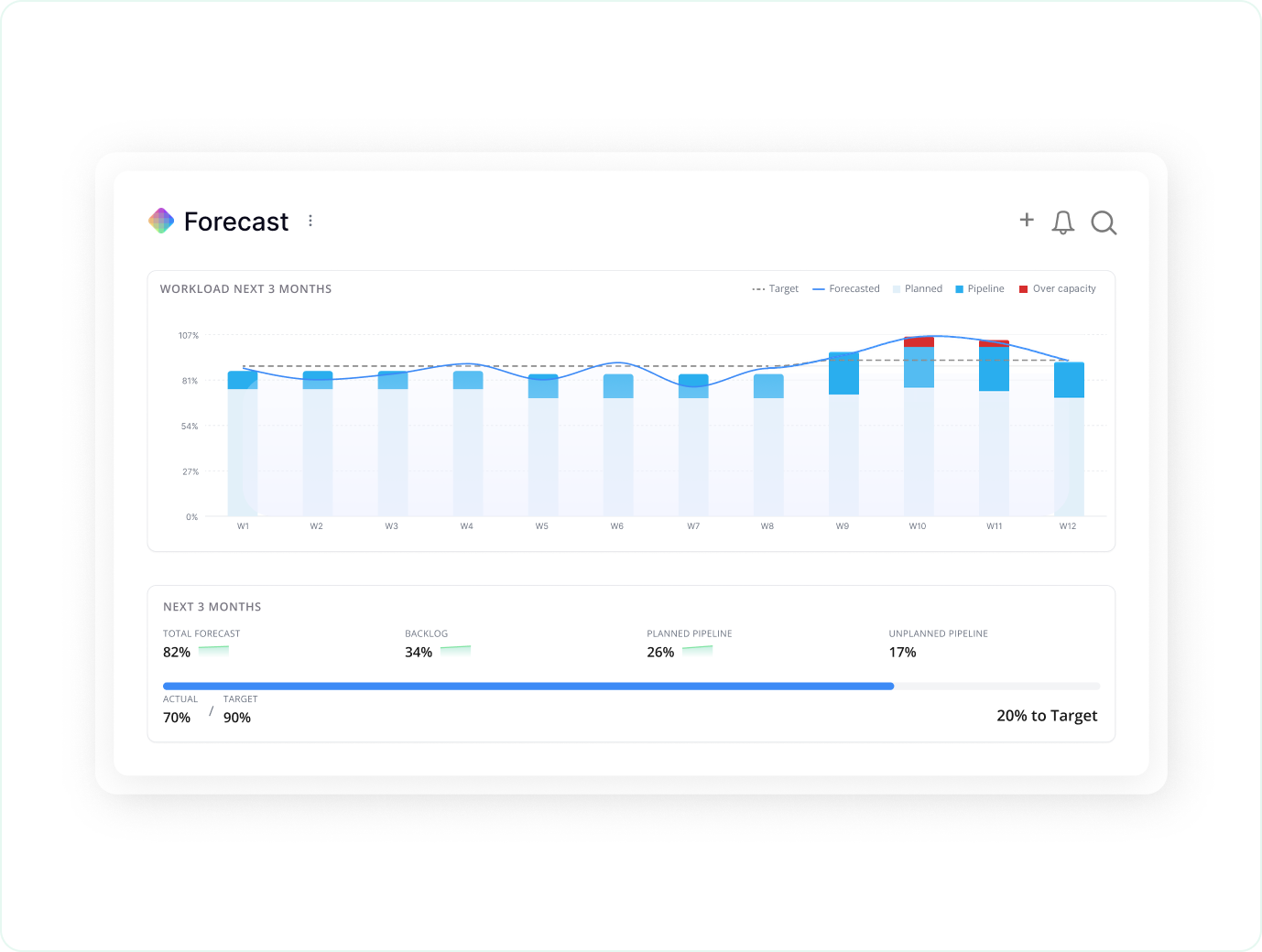
Months ahead, when the forecast comes from the plan. Mosaic AI forecasts demand by role from booked work and the weighted pipeline, against the capacity of the people who will be free, so the shortfall shows while there’s still time to hire.
Within four months on Mosaic, a firm’s next-quarter forecast can be accurate to within about 3% to 4%.
How do agencies decide when to hire versus use freelancers?
Agencies look at the season as well as the role. Busy seasons, launches and one-off productions are freelancer work, and a role that stays short after the season passes is a hire. Mosaic forecasts workload by role from booked work and the pipeline, so an agency can see in August which roles fall short in November.
Freelancers sit in the same plan as staff, so their weeks show up next to everyone else’s when work is assigned.
How do consulting firms decide when to hire full-time versus bring in contractors?
Consulting firms weigh the bench as well. A hire who would sit on the bench between engagements costs more than a contractor for the same months, so the question is whether the forecast shows the role busy across several engagements, not just the next one.
Resource management software for consulting firms · How to forecast staffing needs
Why do hiring plans built from department requests miss?
Because requests carry everyone’s padding. Teams ask for the headcount they’d like, the requests add up across offices, and the total has little to do with the work. A forecast built from the plan counts the hours the work needs, by role, so hiring follows the work rather than the budget round.
Workforce planning from the project plan · Revenue and headcount forecasting

“Knowing in advance when you’re going to need to hire in order to meet future backlog is to some extent the holy grail of the professional services industry.”
What else do firms ask about hiring and contractors?
Is it cheaper to hire or use contractors?
It depends how steady the work is. Contractors cost more per hour but stop when the work does, and a hire pays off when the forecast keeps the role busy for quarters.
How far ahead should a firm plan hiring?
Far enough to cover the time it takes to hire and train someone, which for most firms means a quarter or more. That’s why the forecast has to come from the plan.
Can Mosaic forecast hiring needs?
Yes. Mosaic AI forecasts demand by role from booked and pipeline work against capacity, and shows which roles run short and when.
Does Mosaic replace our HR system?
No. Your HR system stays the record for employees. Mosaic plans the work and the people it needs.
Book a 20-minute demo
See which roles run short next quarter, starting from your own projects and pipeline.